Intro - luxe
Gauche
header-cas

Challenge
Creating an interactive digital twin to operate Morland Mixité Capitale in real time, a Parisian building district with multiple and evolving uses, in order to optimize operations and reveal new opportunities for its different stakeholders.
Solution
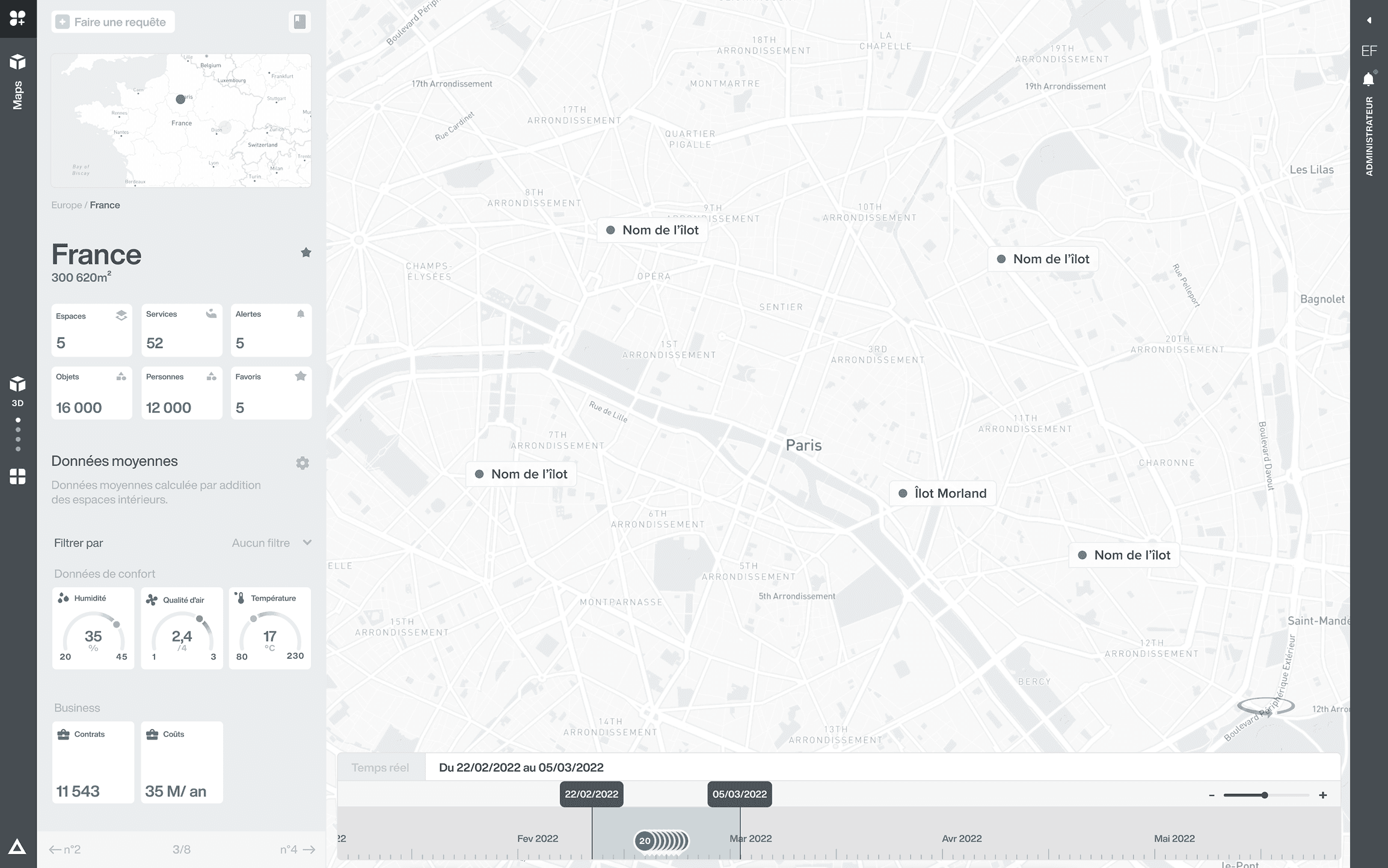
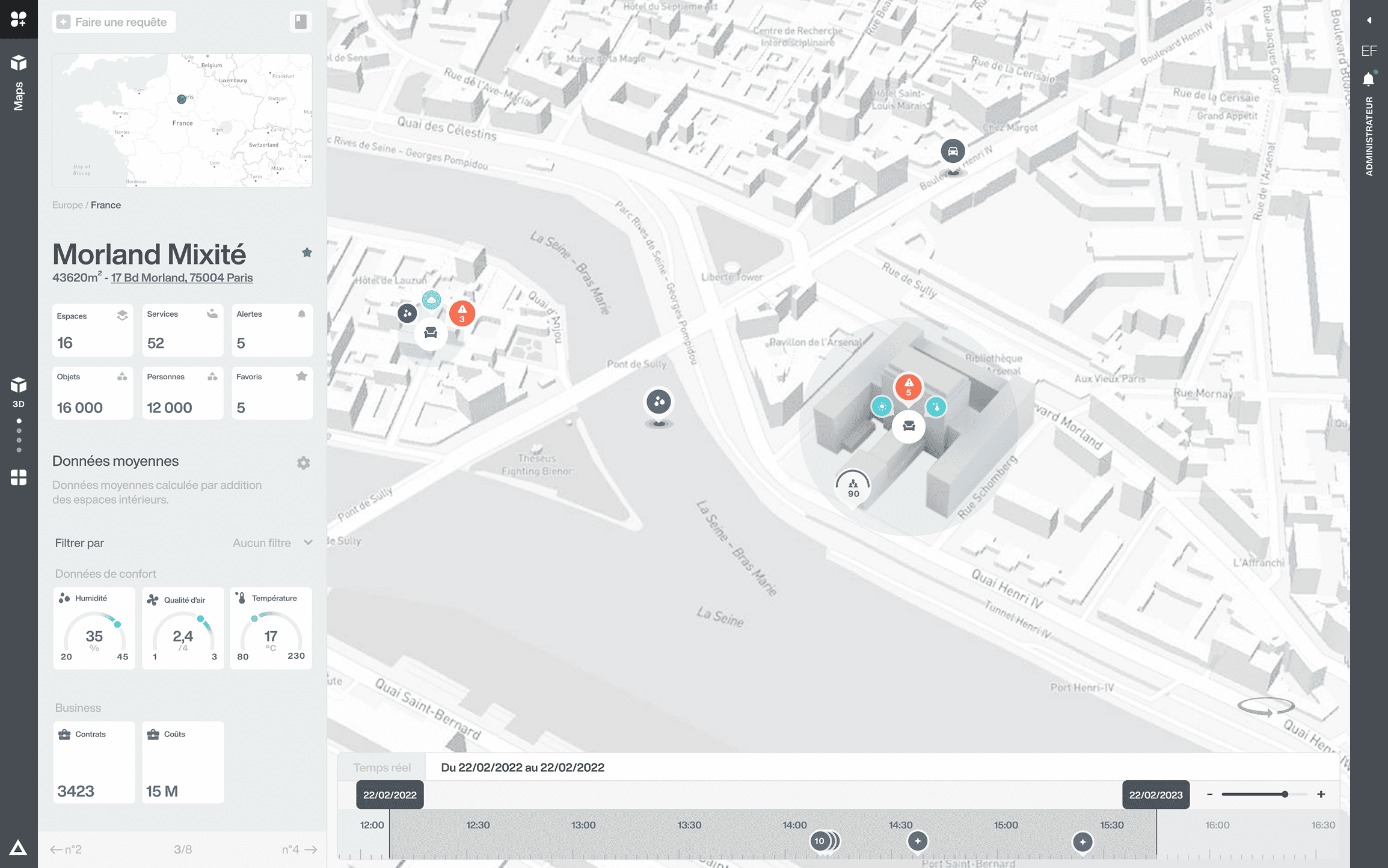
Souffl designed an intuitive interface capable of representing, in real time, the usage and state of spaces, providing targeted indicators based on user profiles, and centralizing technical and human systems within a single platform.
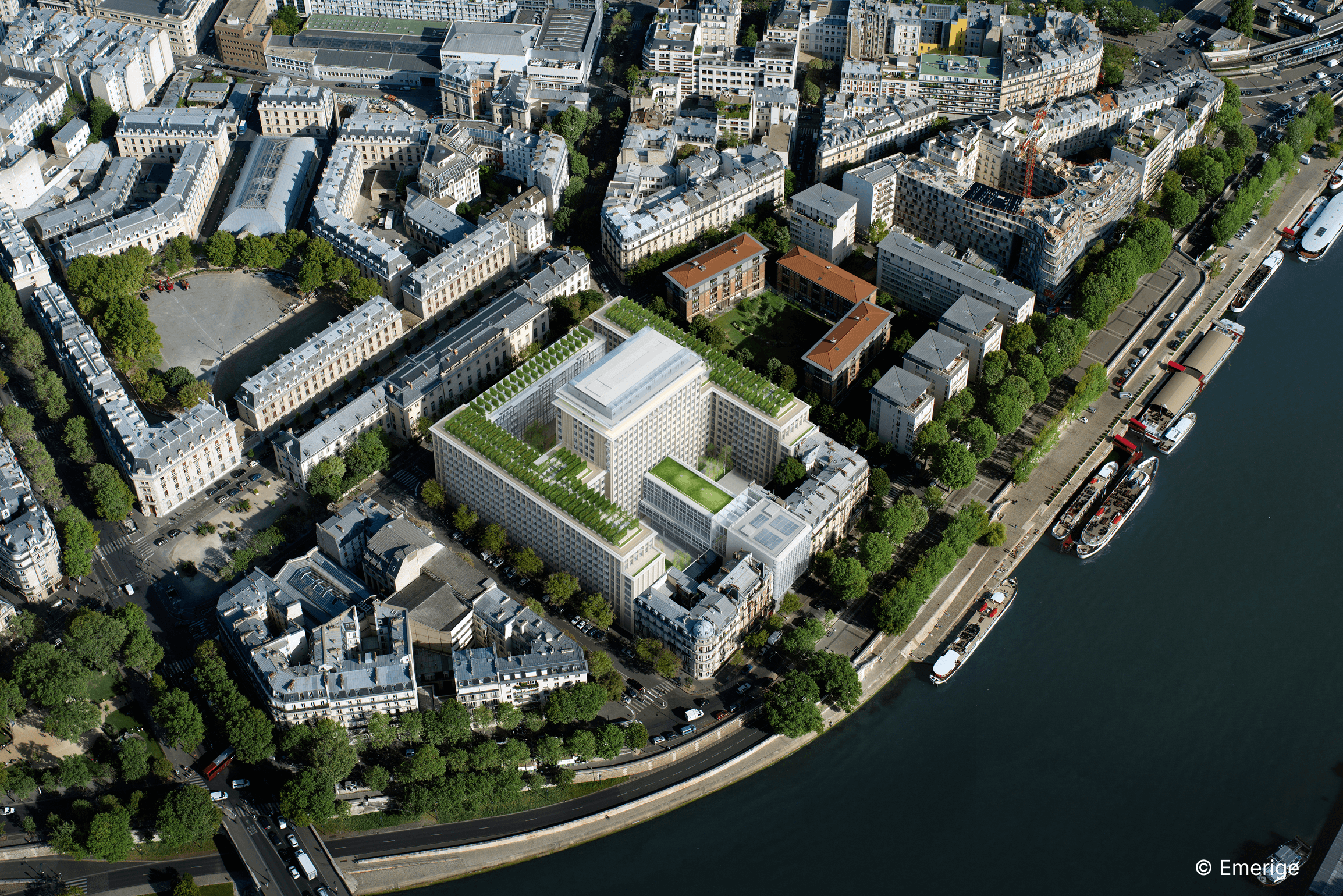
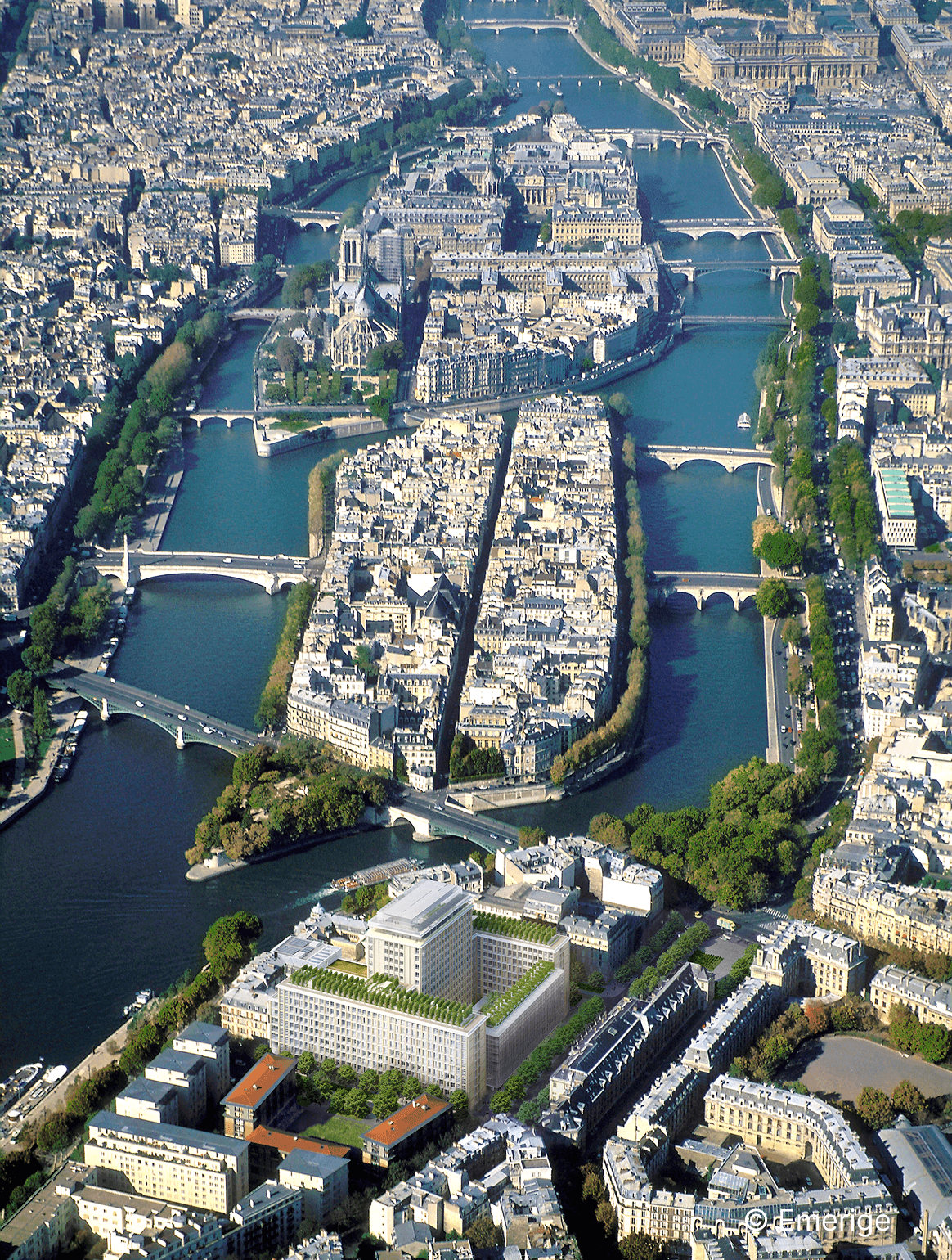
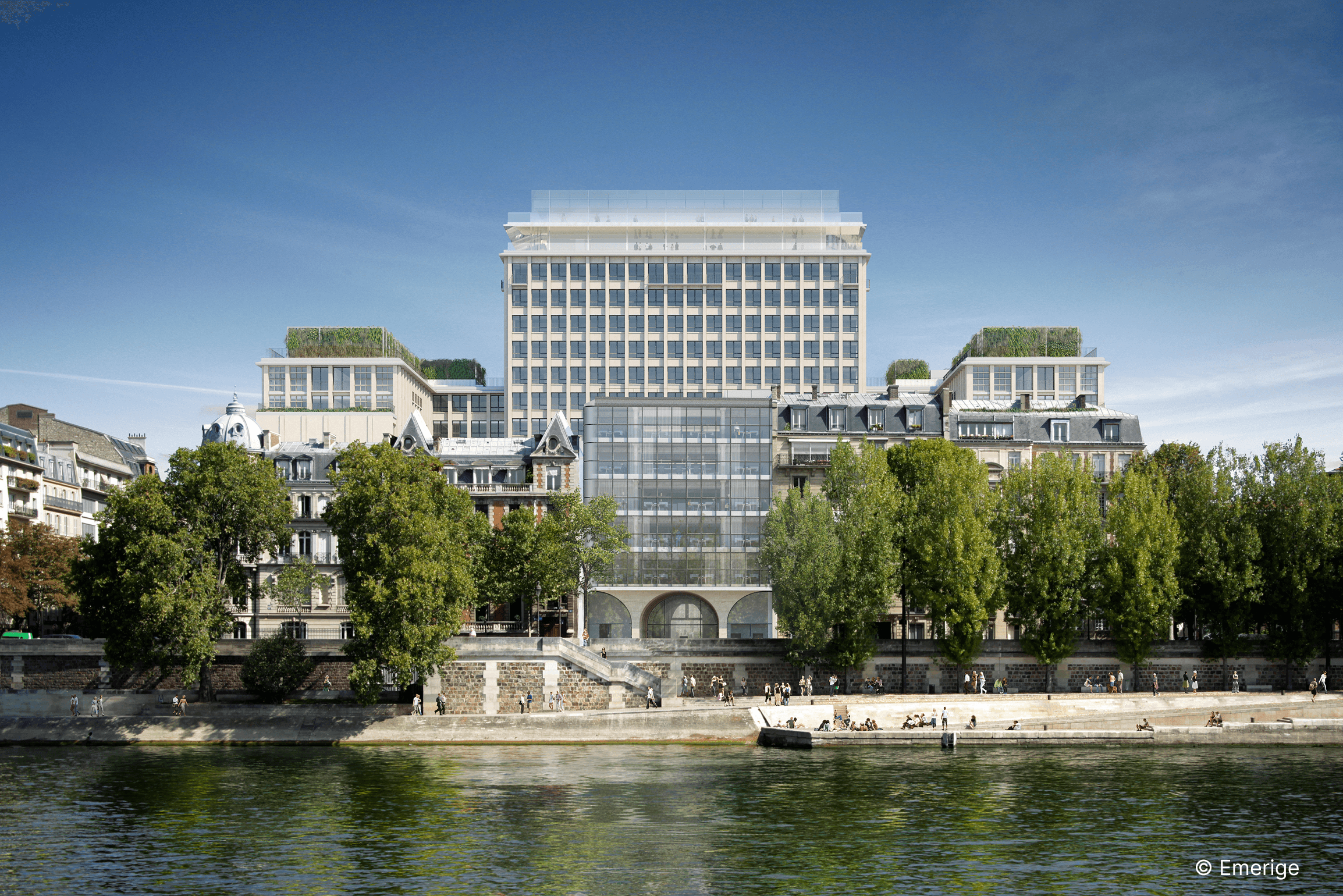
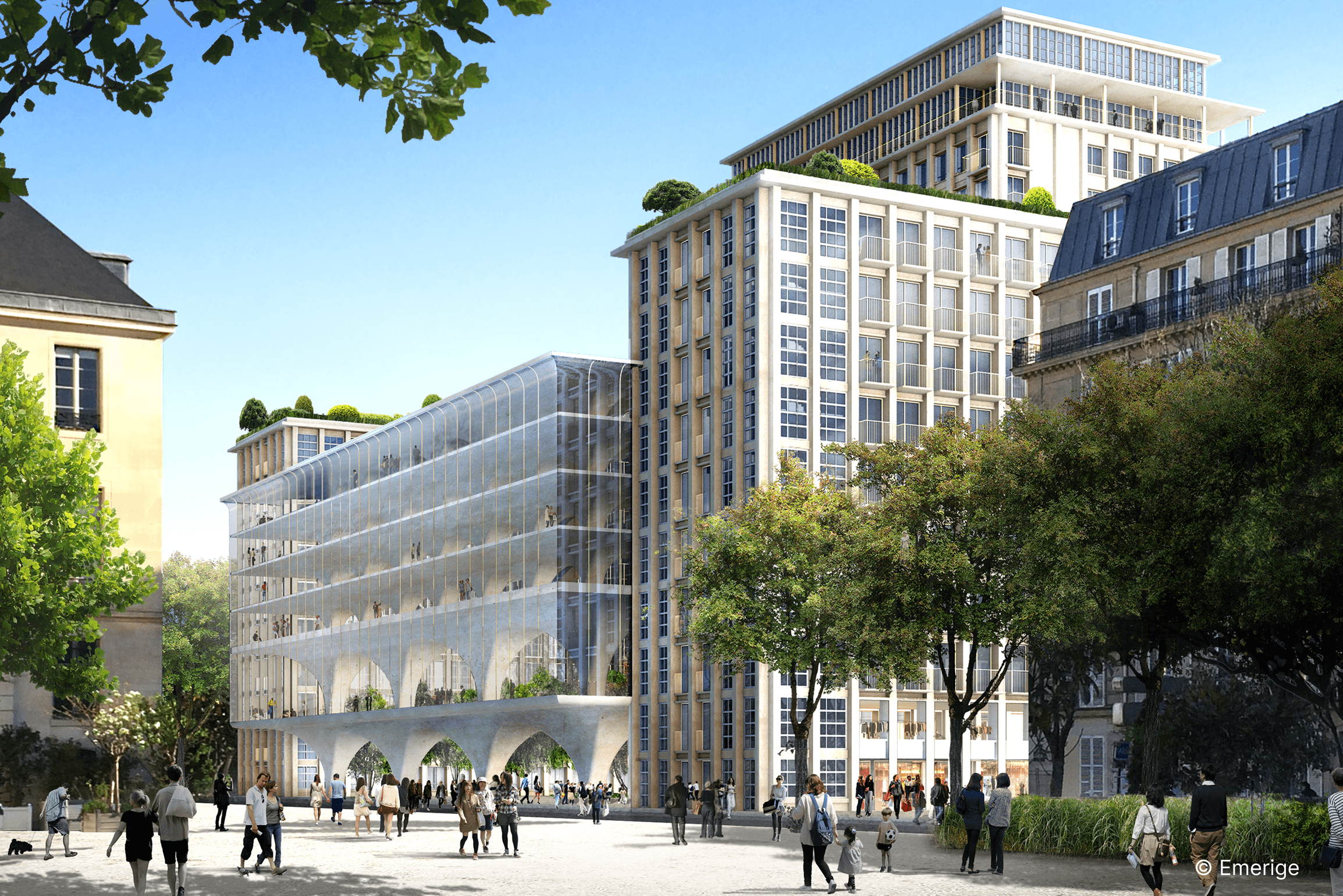
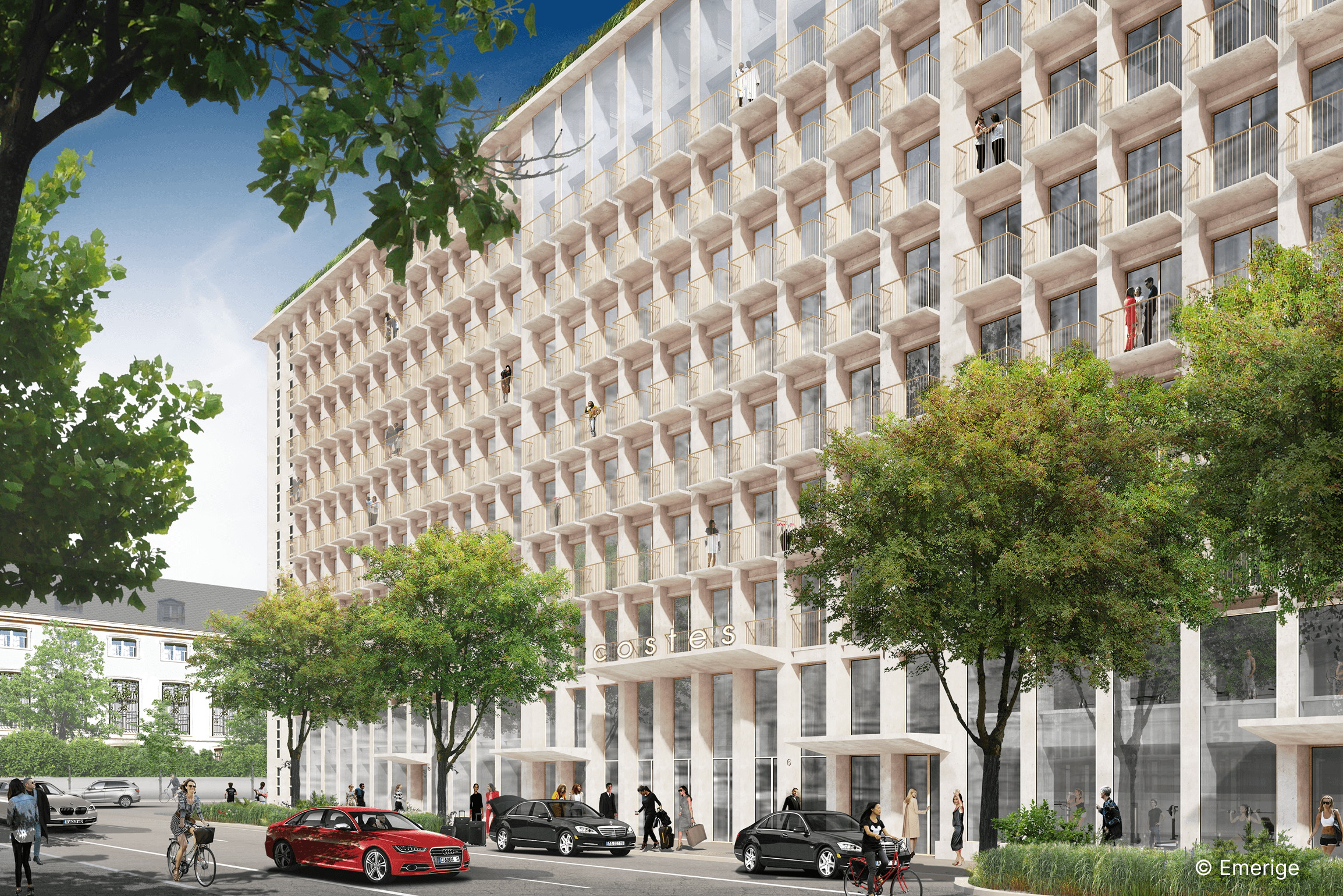
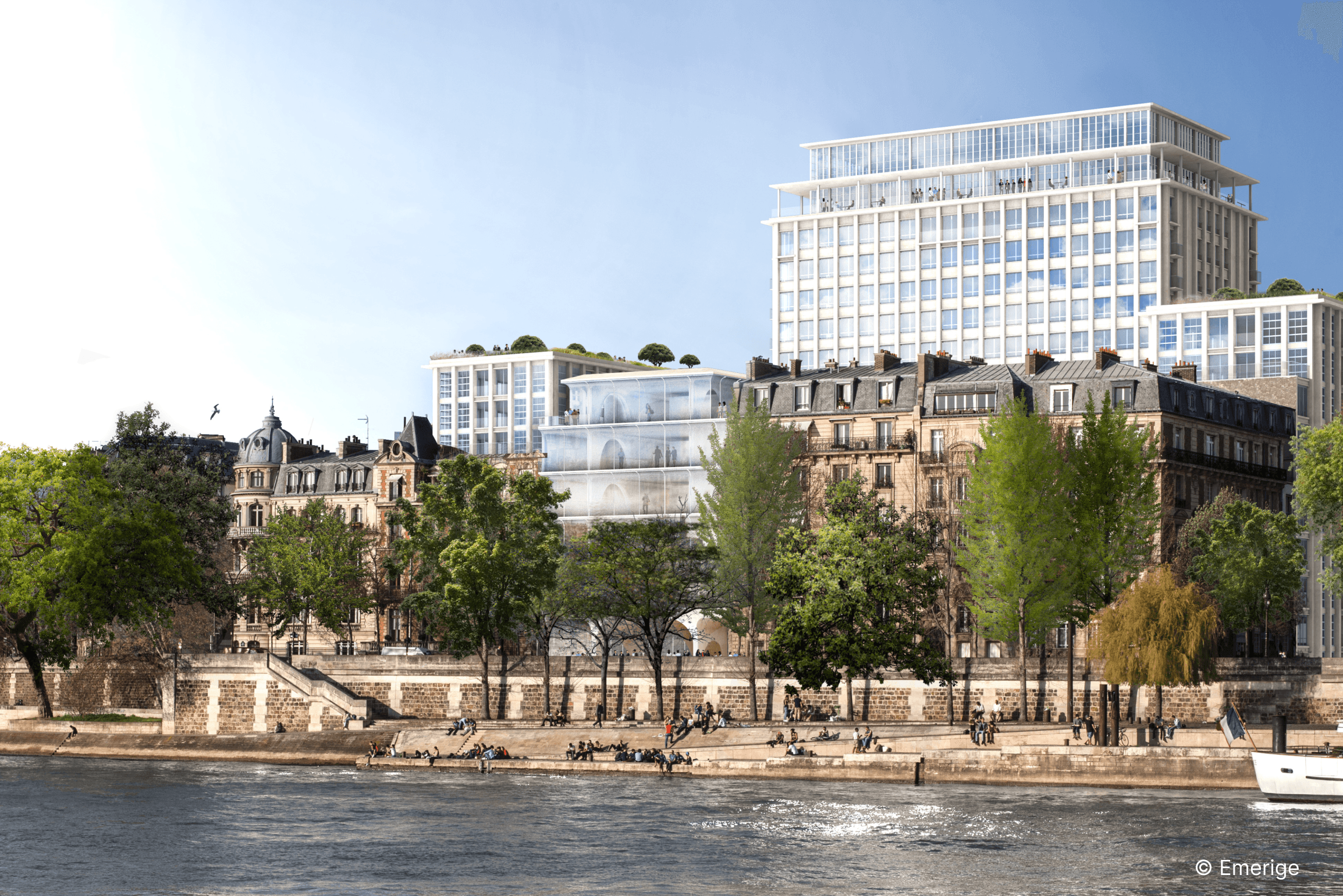
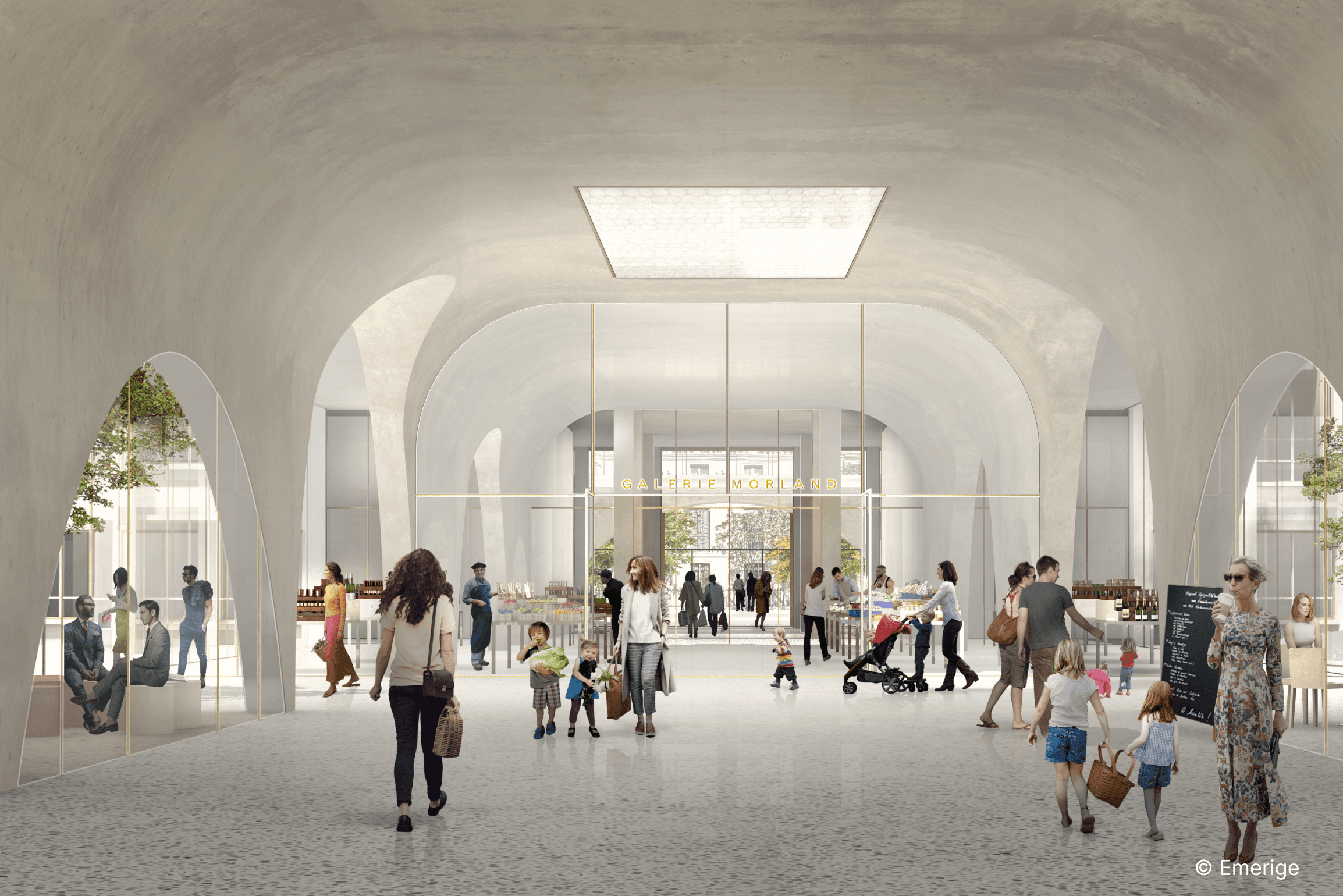
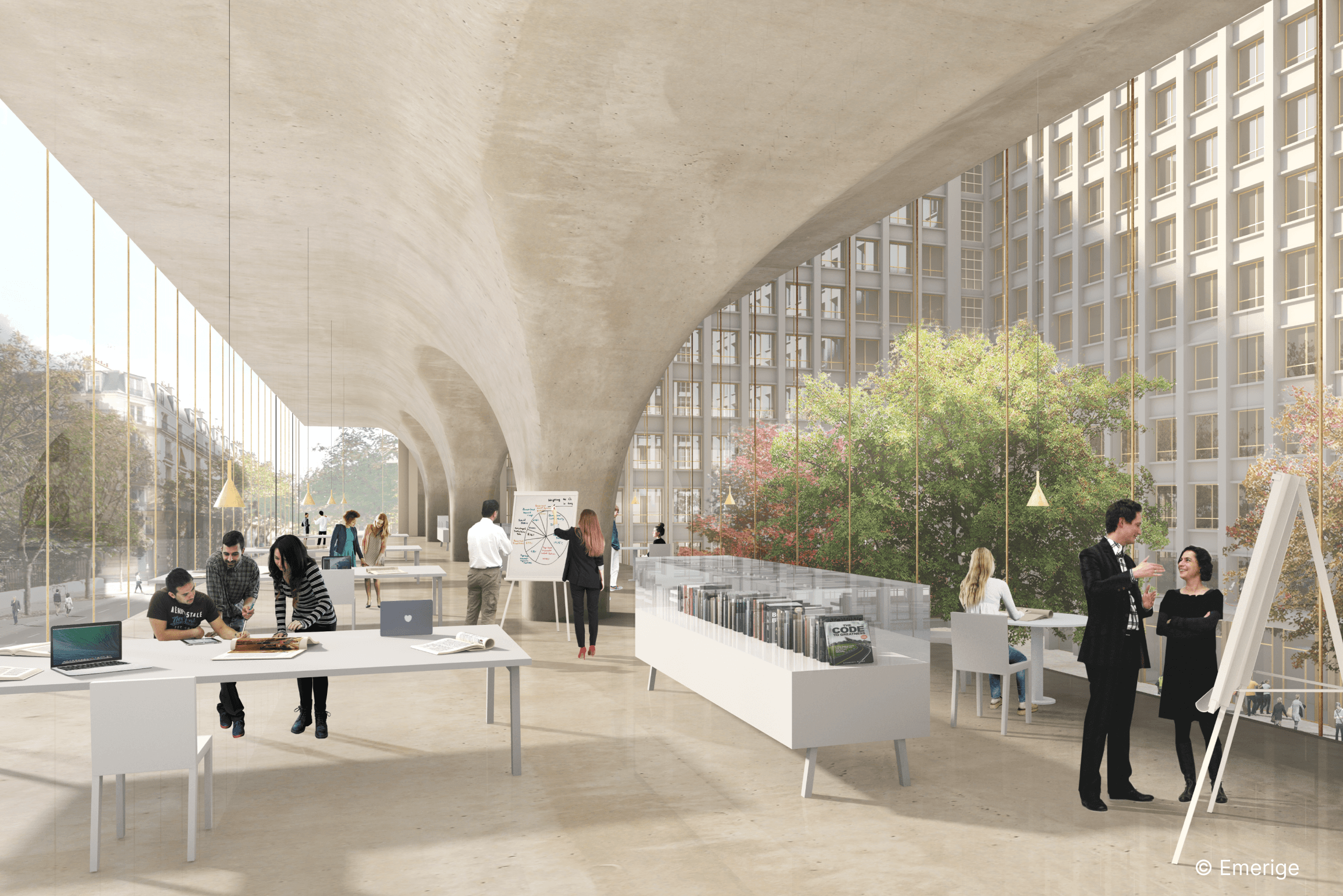
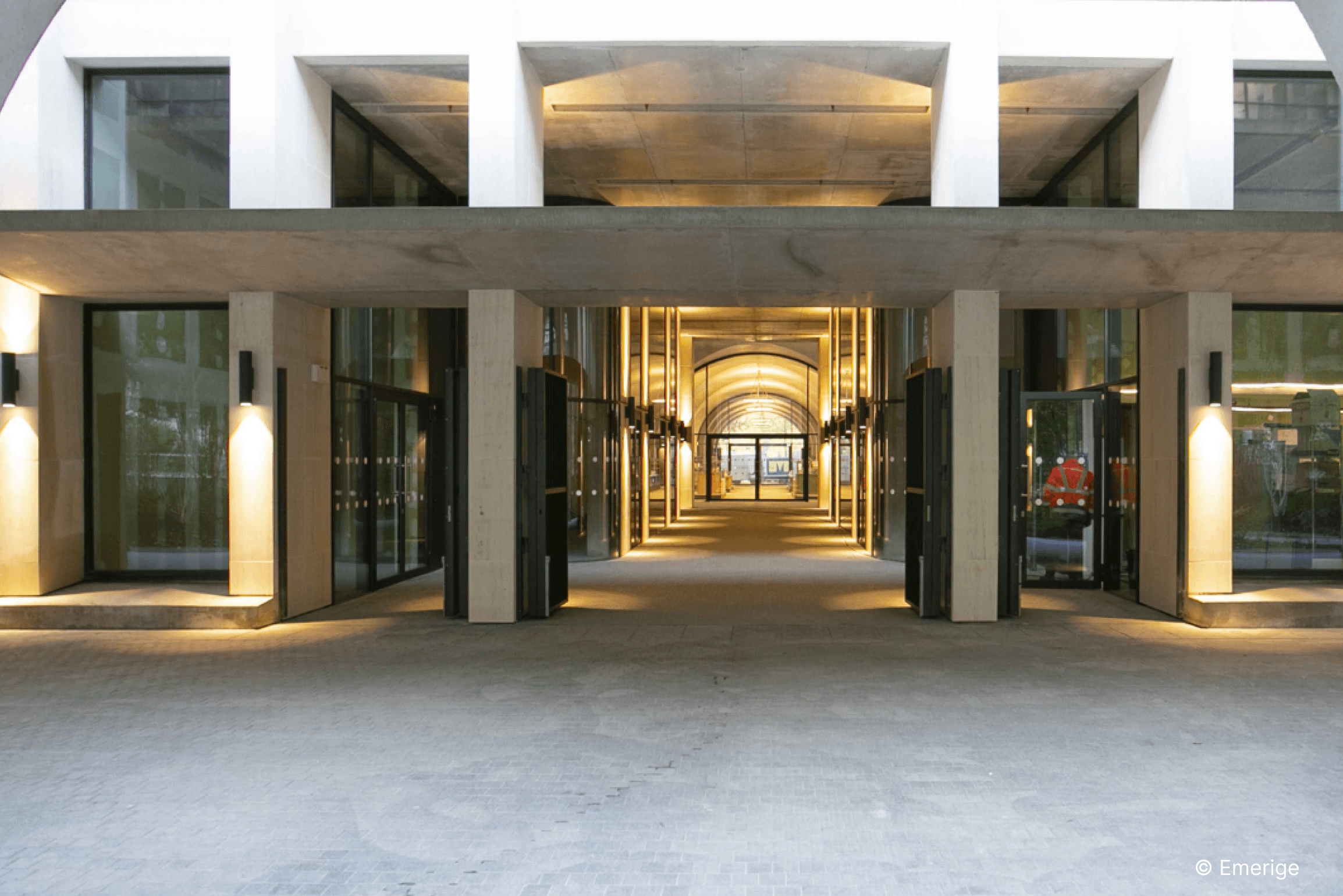
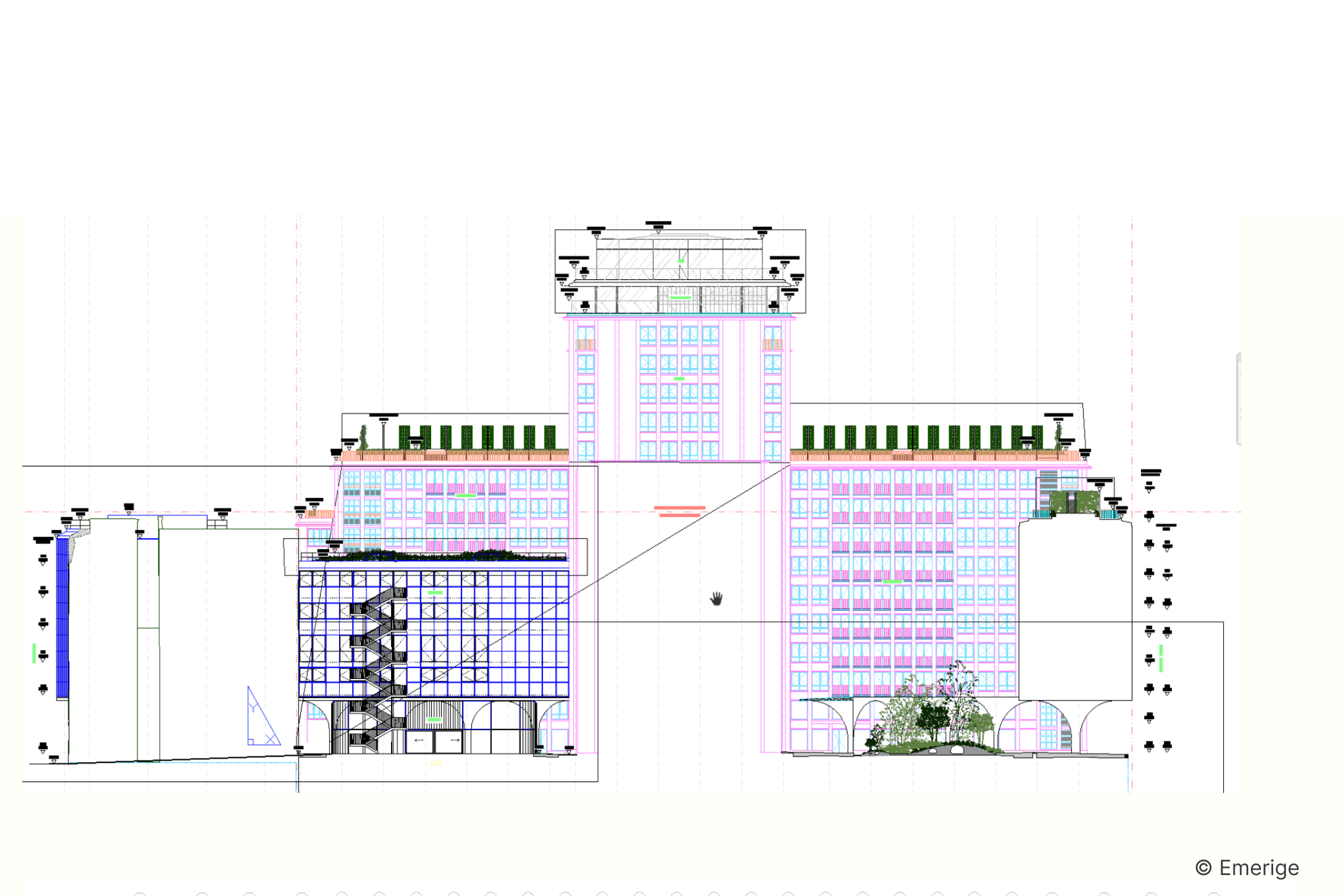
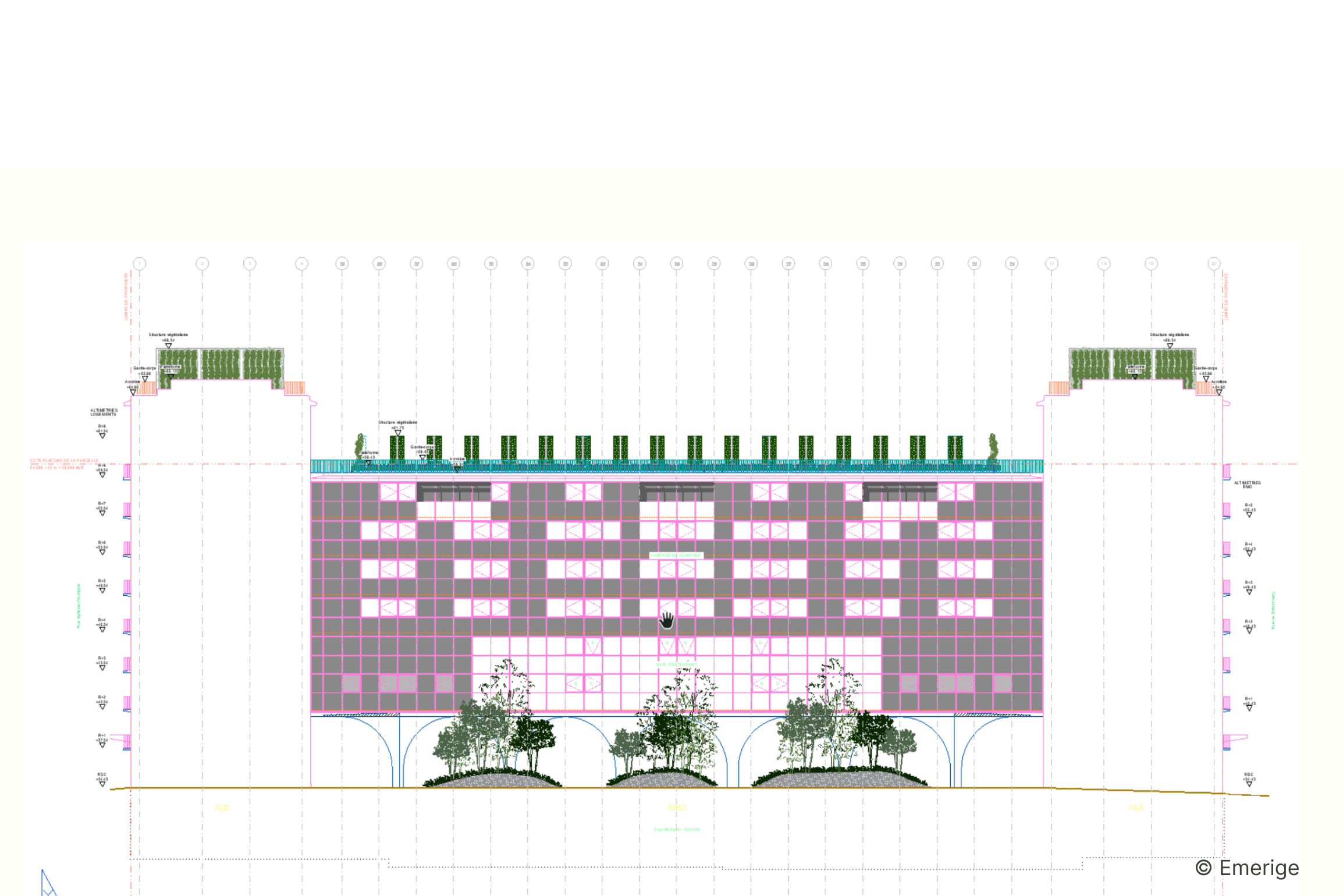
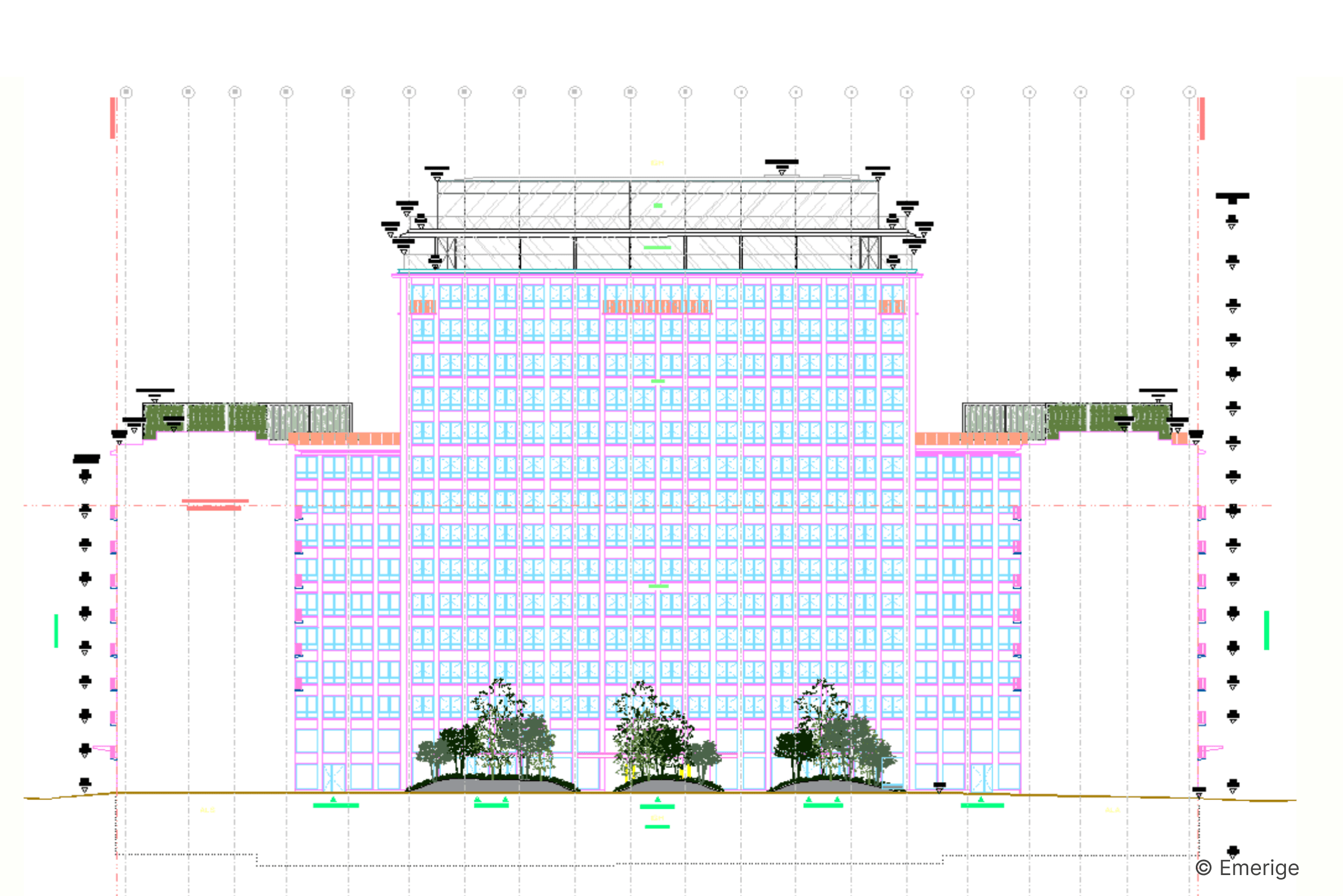
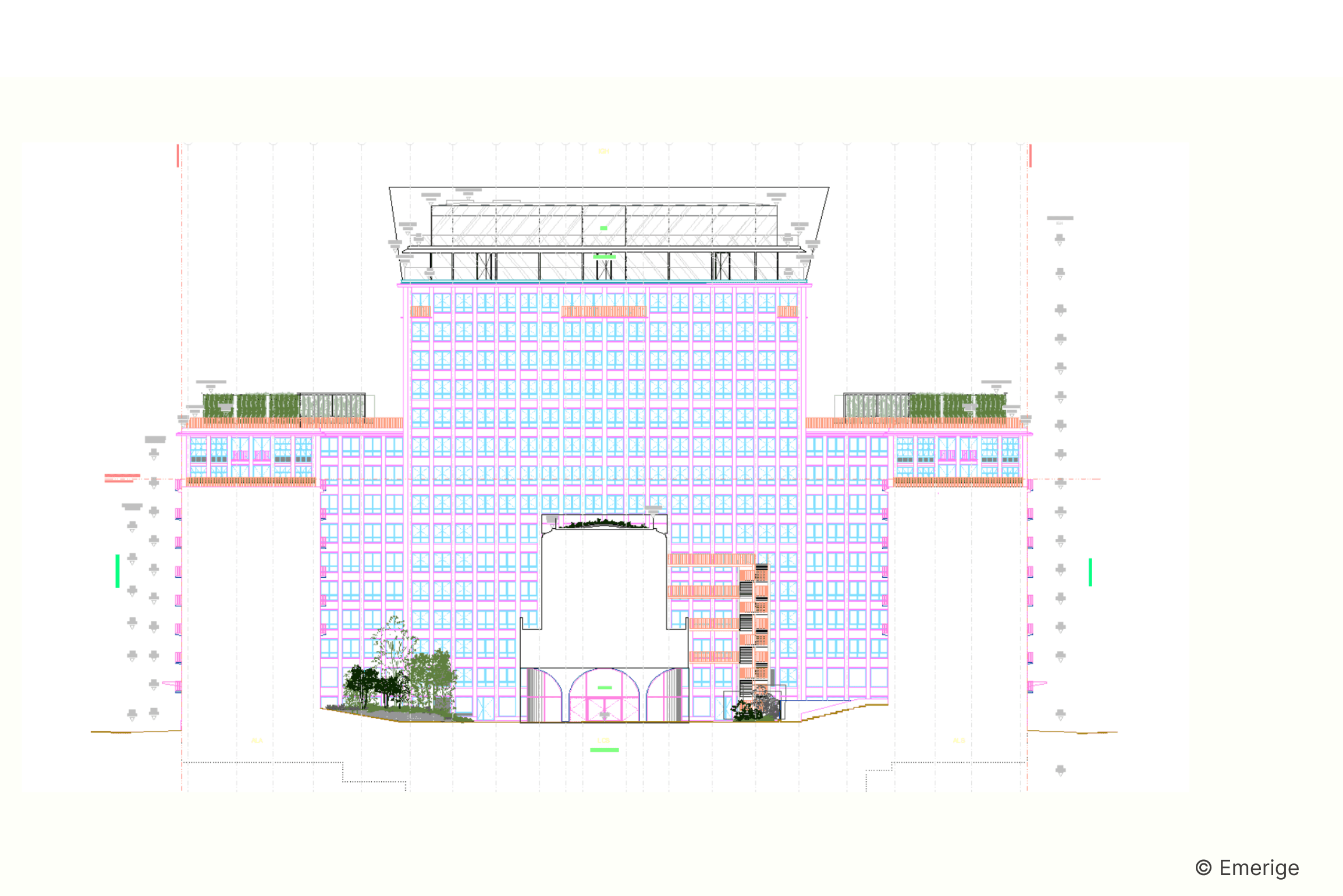
The former Préfecture de Paris on Boulevard Morland, built in 1960 by architect Albert Laprade, was a large, administrative complex with a rigid façade grid that made it look closed off and inaccessible. As part of the Réinventer Paris competition, David Chipperfield Architects Berlin and the developer Emerige won the project to transform the site. The resulting development, originally called Morland Mixité Capitale and now known as La Félicité, refurbishes, remodels and extends the existing buildings to create an open, public, campus-like destination with a positive impact on the neighbourhood. The programme brings together a mix of uses: high-end and affordable housing, a hotel, youth hostel, offices, retail, a gallery, market hall and childcare facility.
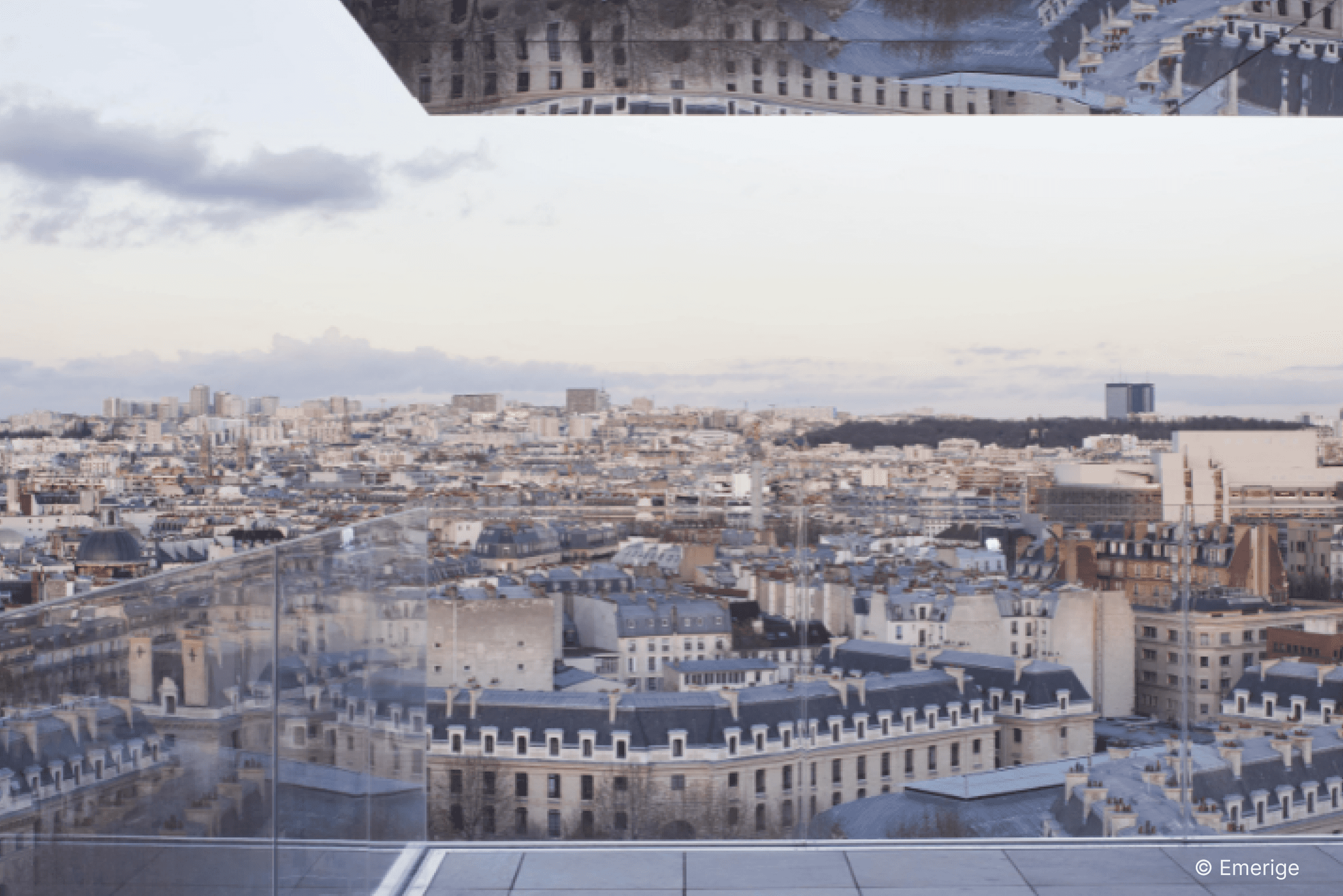
The top two floors, previously inaccessible, are reopened to the public and host an inhabitable art installation by Ólafur Eliasson and Sebastian Behmann, along with a bar and restaurant offering panoramic views over Paris.
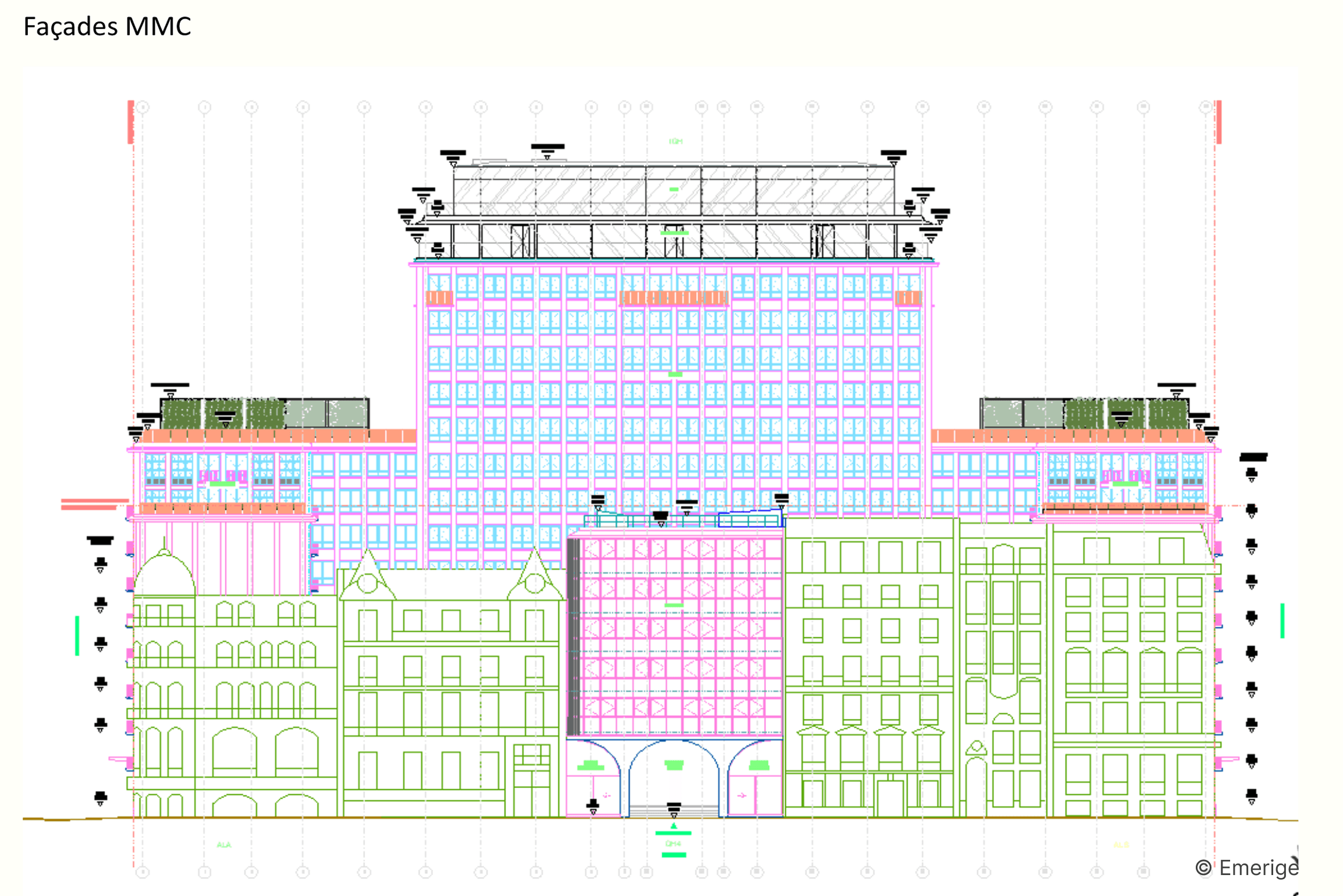
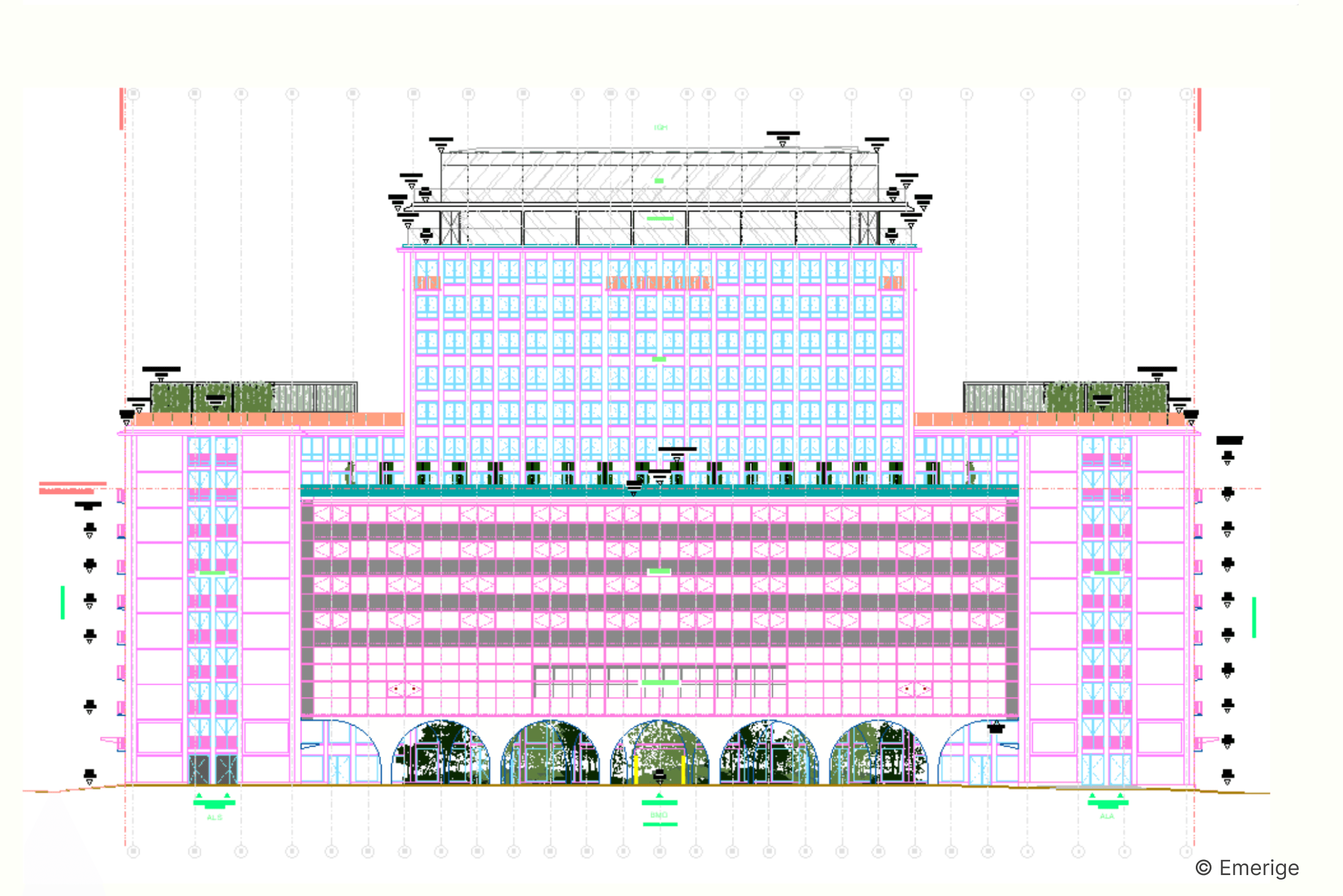
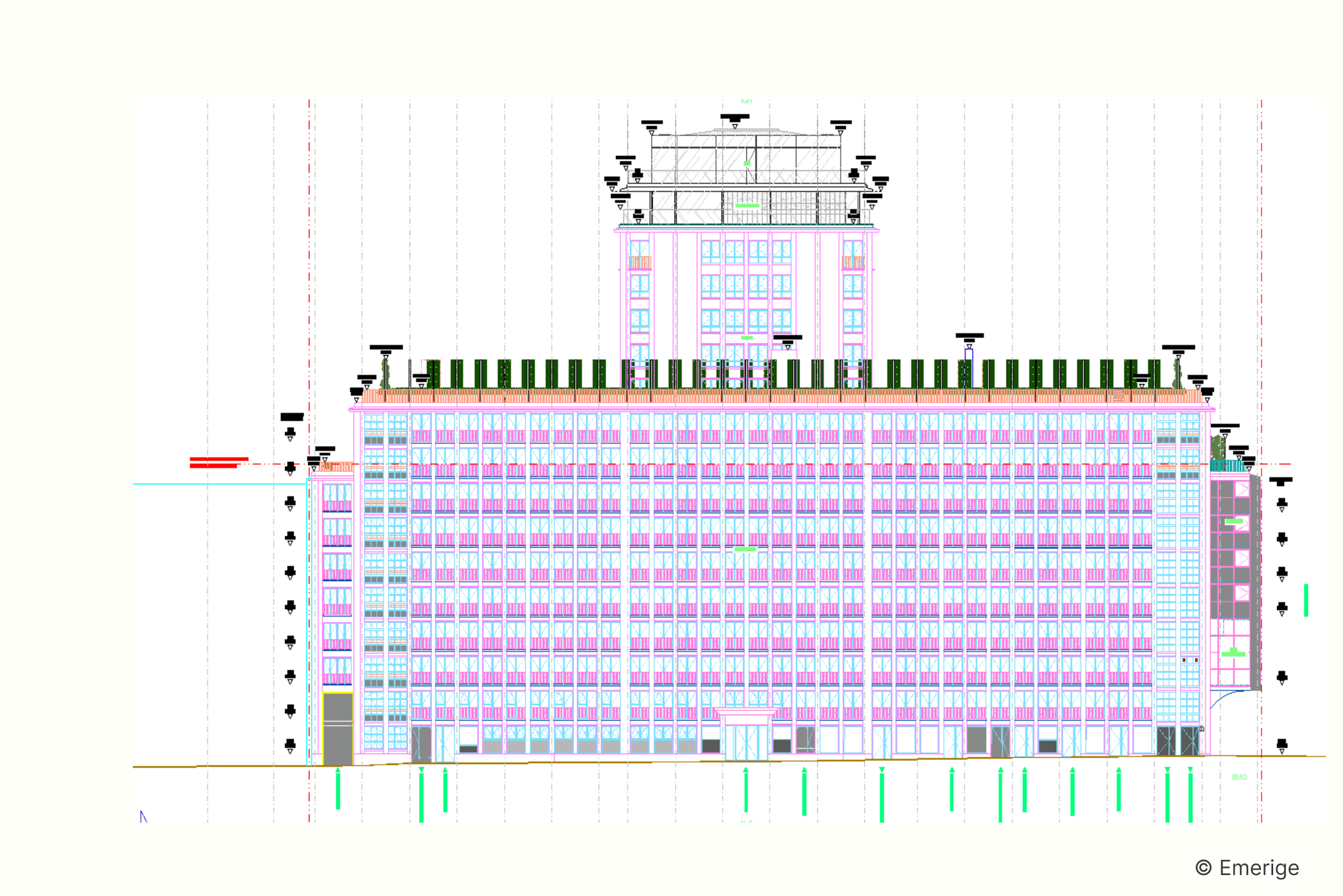
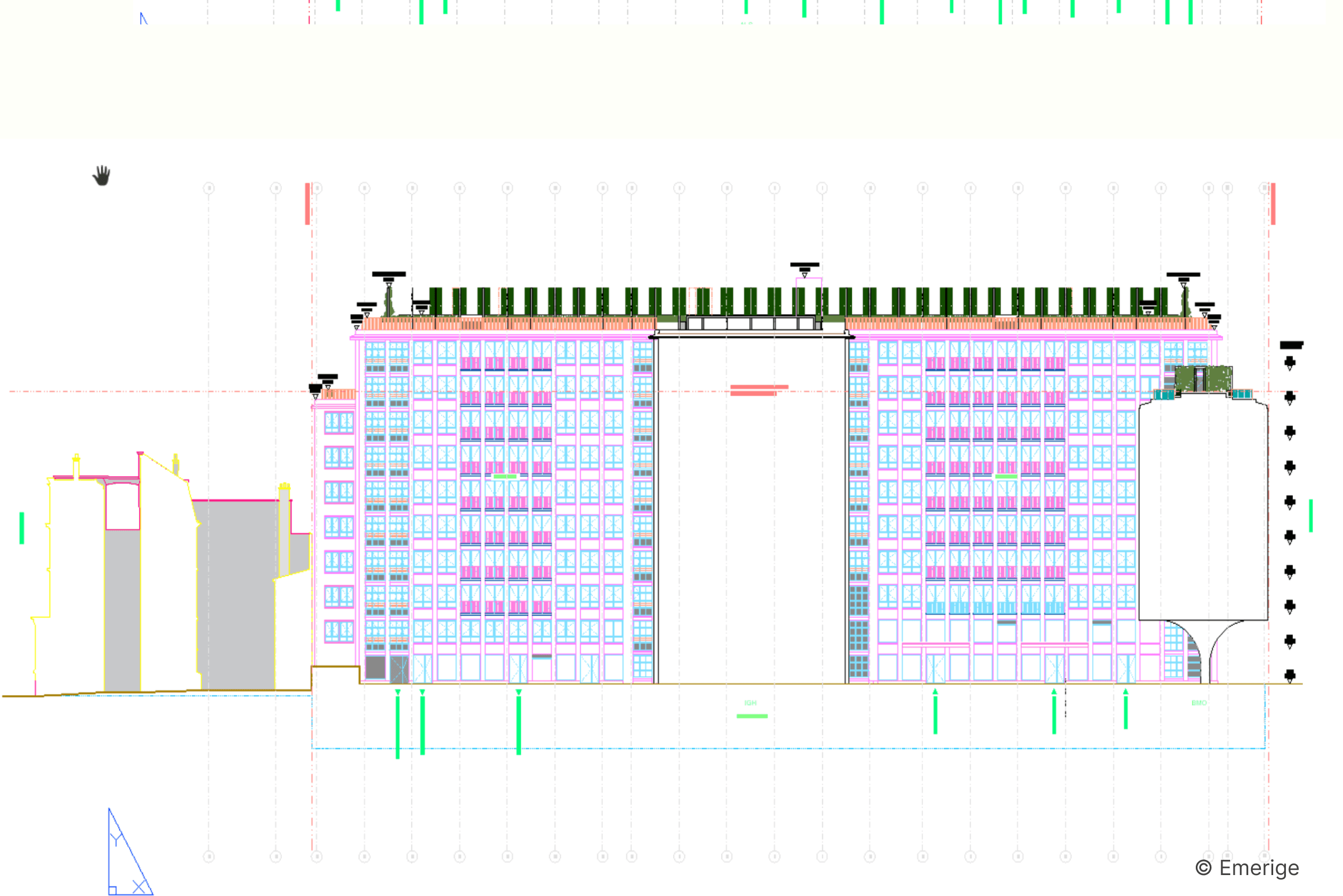
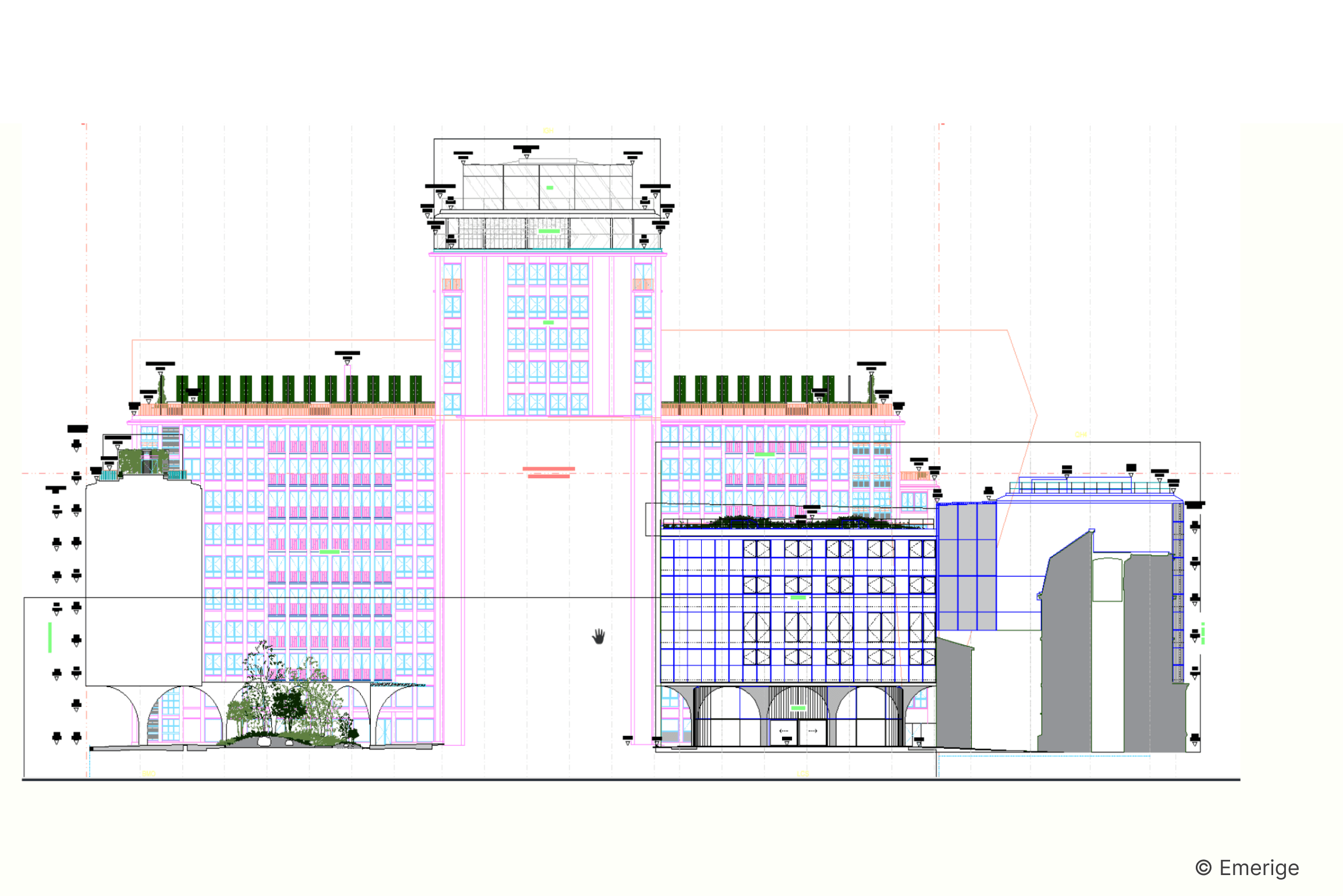
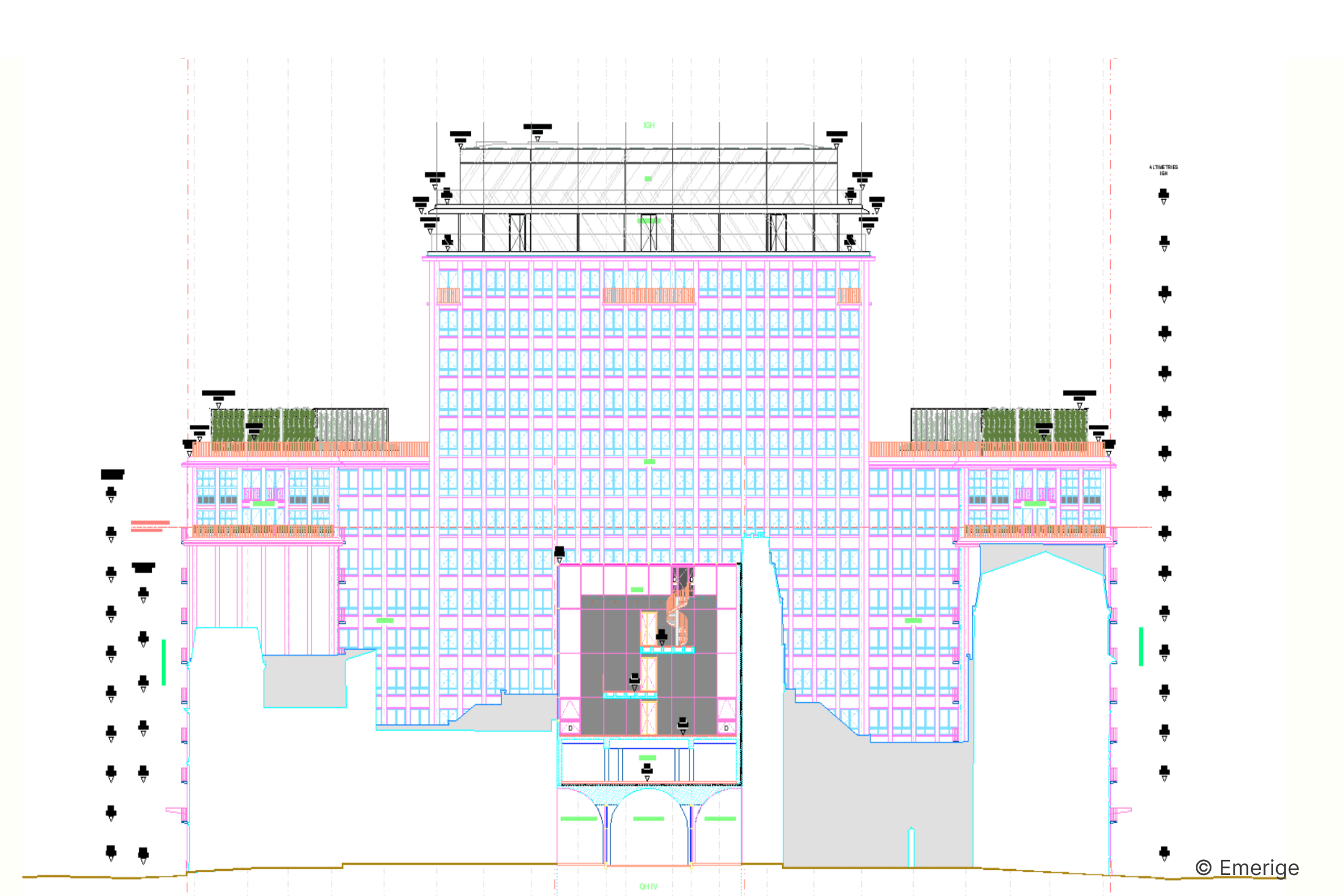
Understanding the environment and
the ecosystem.
We started by understanding Morland Mixité Capitale in its full context, not only as a building but as an ecosystem.
We analyzed architectural plans, spatial organization, technical infrastructures, and the surrounding environment to understand how the building functions as a whole. Sun exposure, temperature variations, urban flows, and mobility changes were examined to see how they influence usage, occupancy, and energy consumption. At the same time, we studied the interdependencies between spaces and technical systems such as air conditioning and heat pumps, controlled from specific zones. This systemic reading revealed how environmental and technical factors shape usage patterns, impact energy performance, and ultimately influence the building’s economic model.
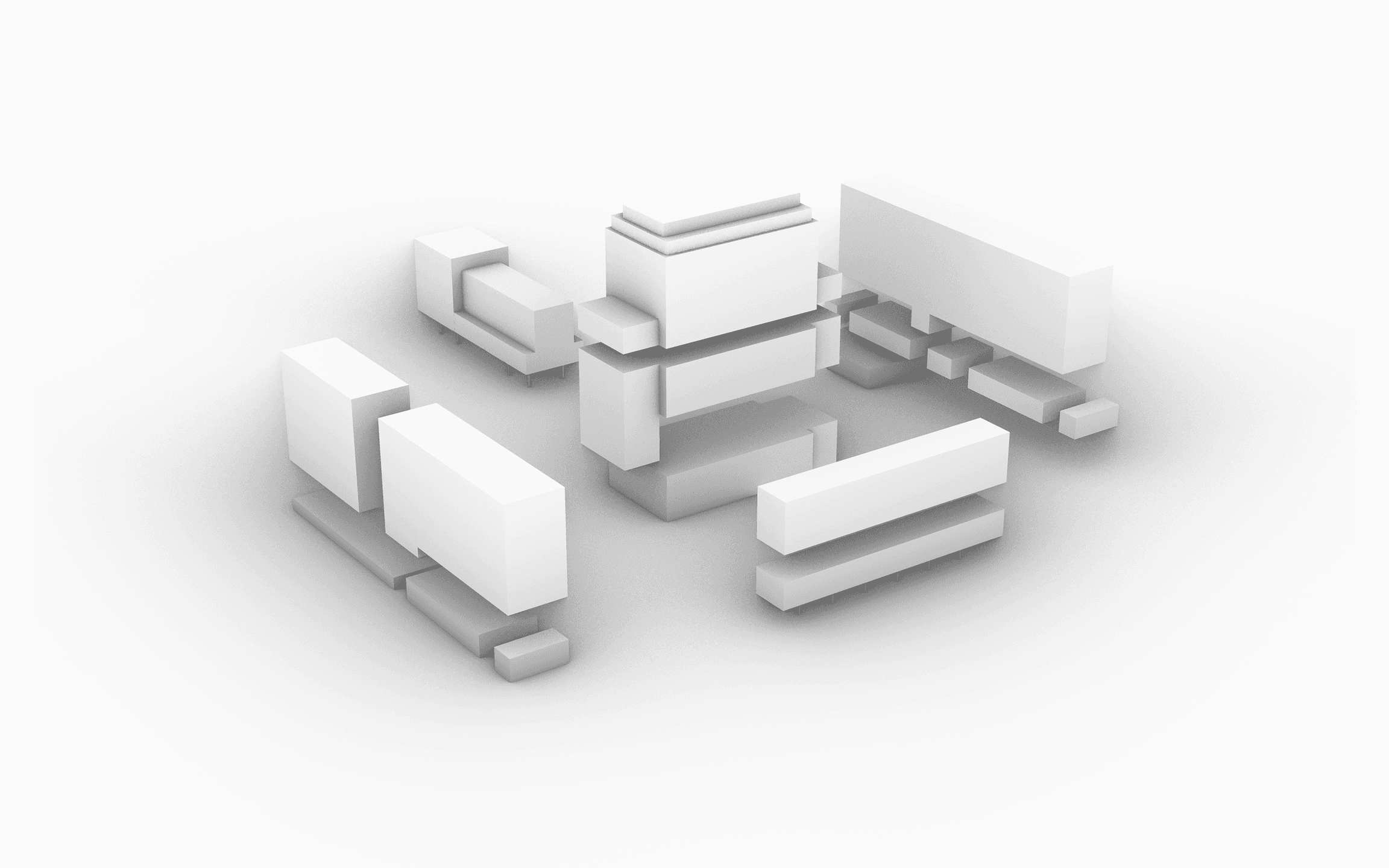
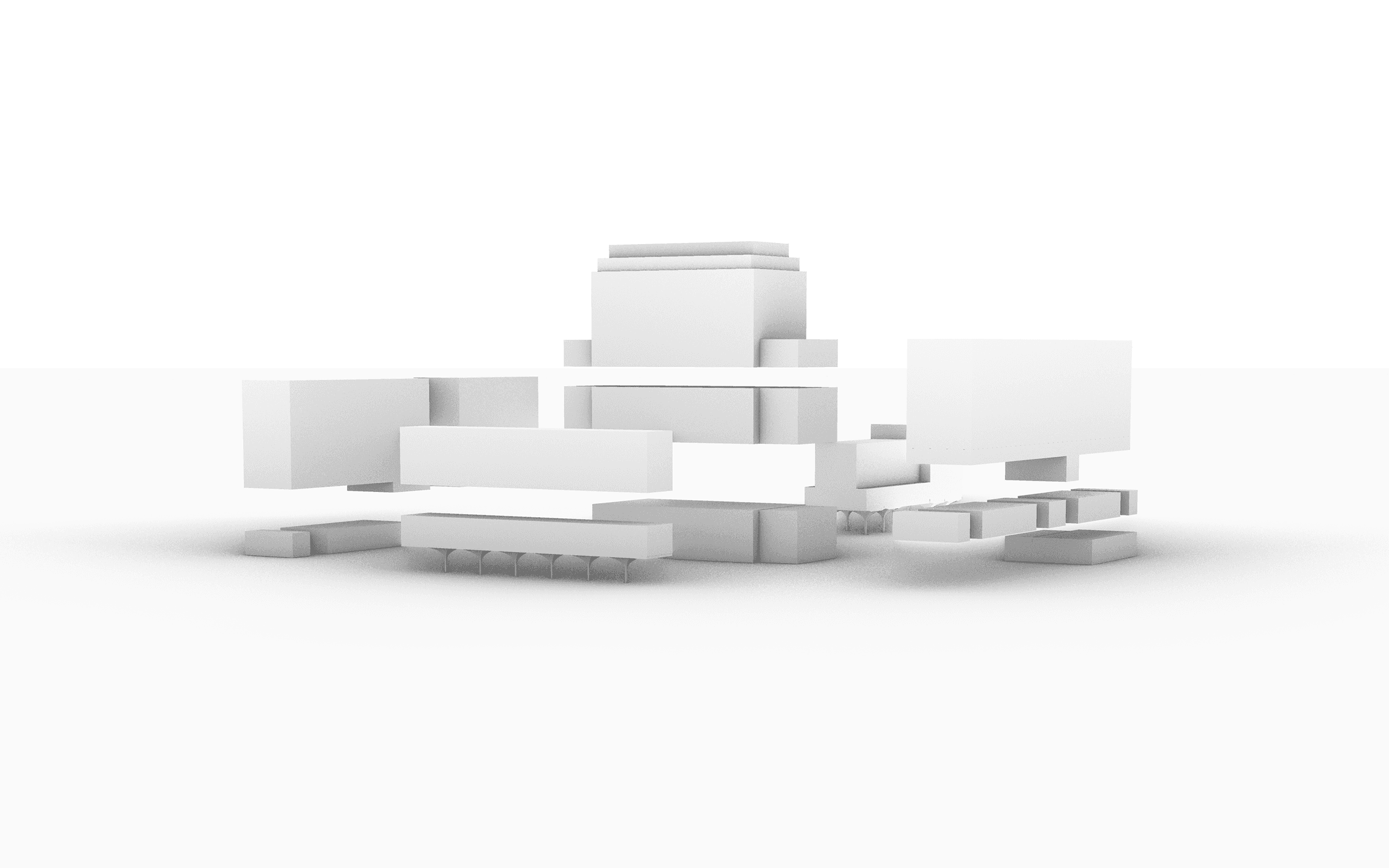
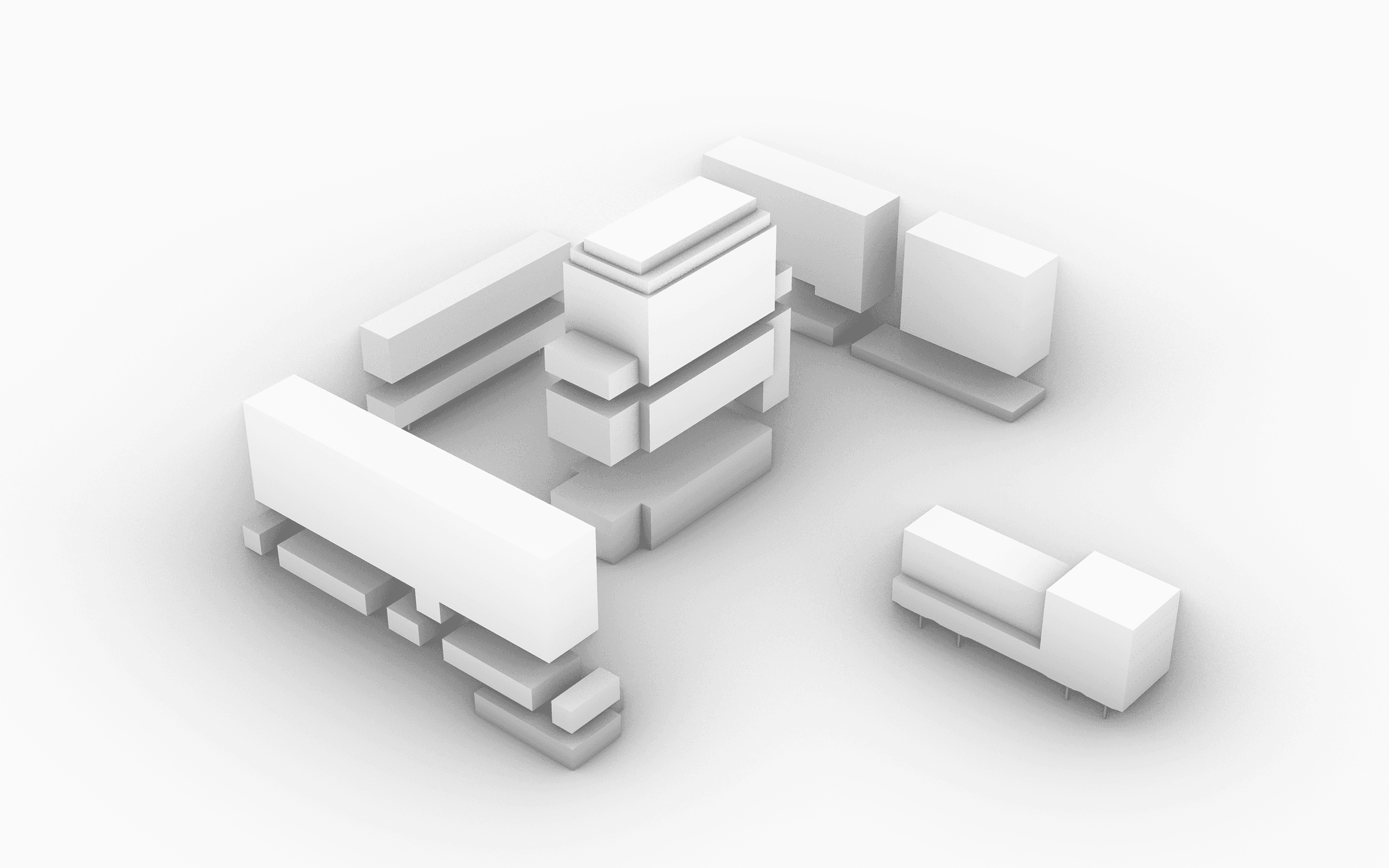
Designing a simplified 3D spatial model.
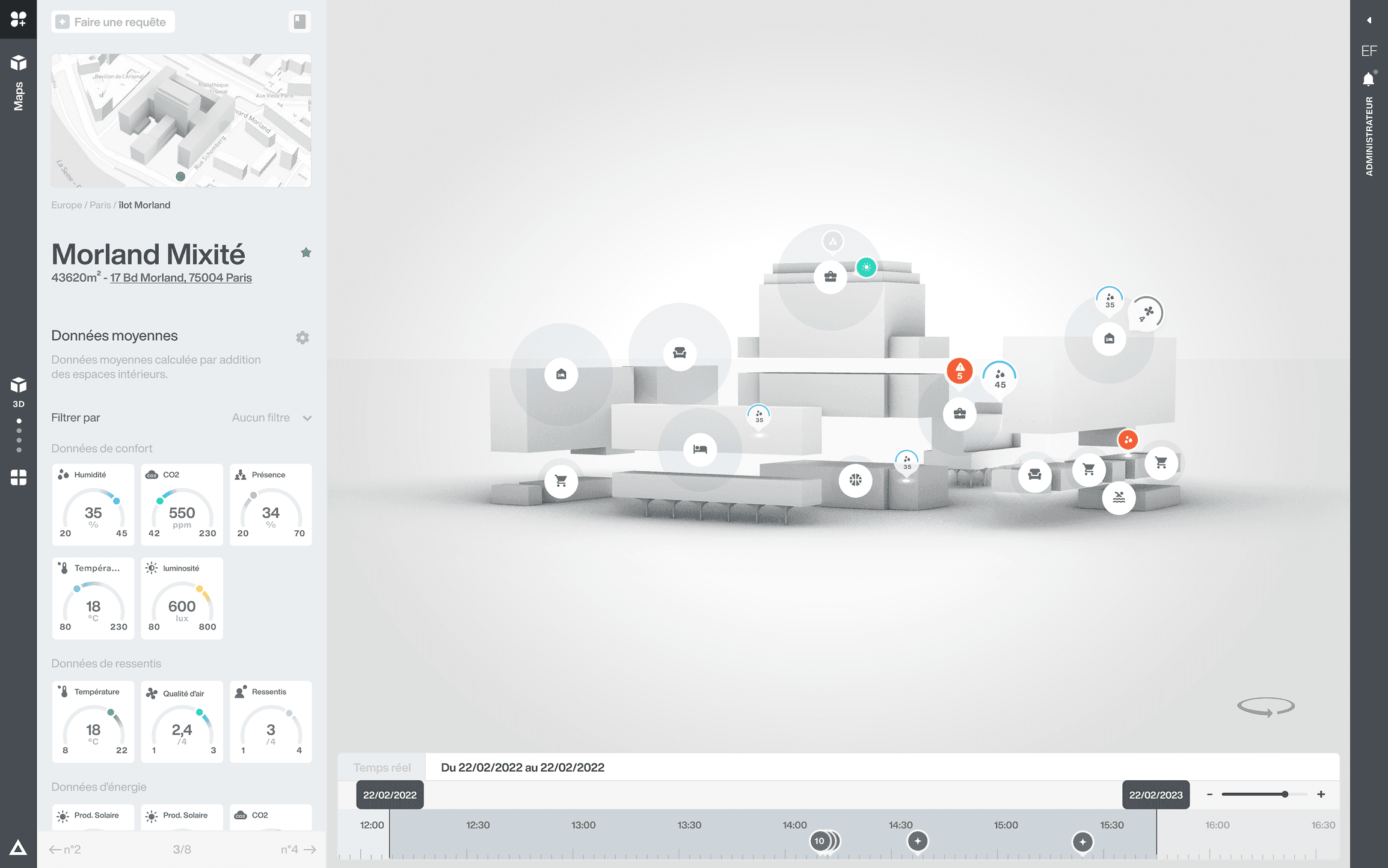
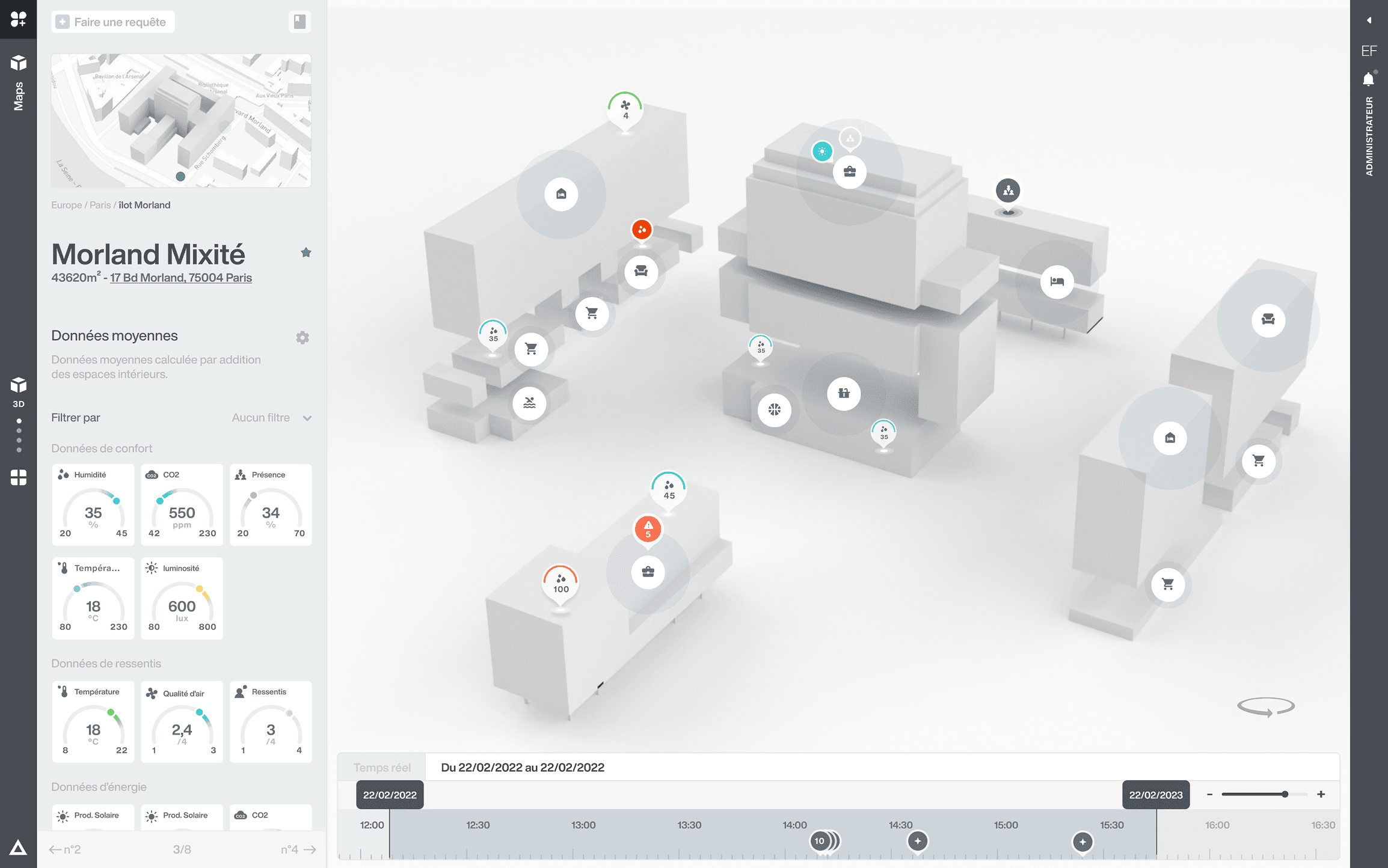
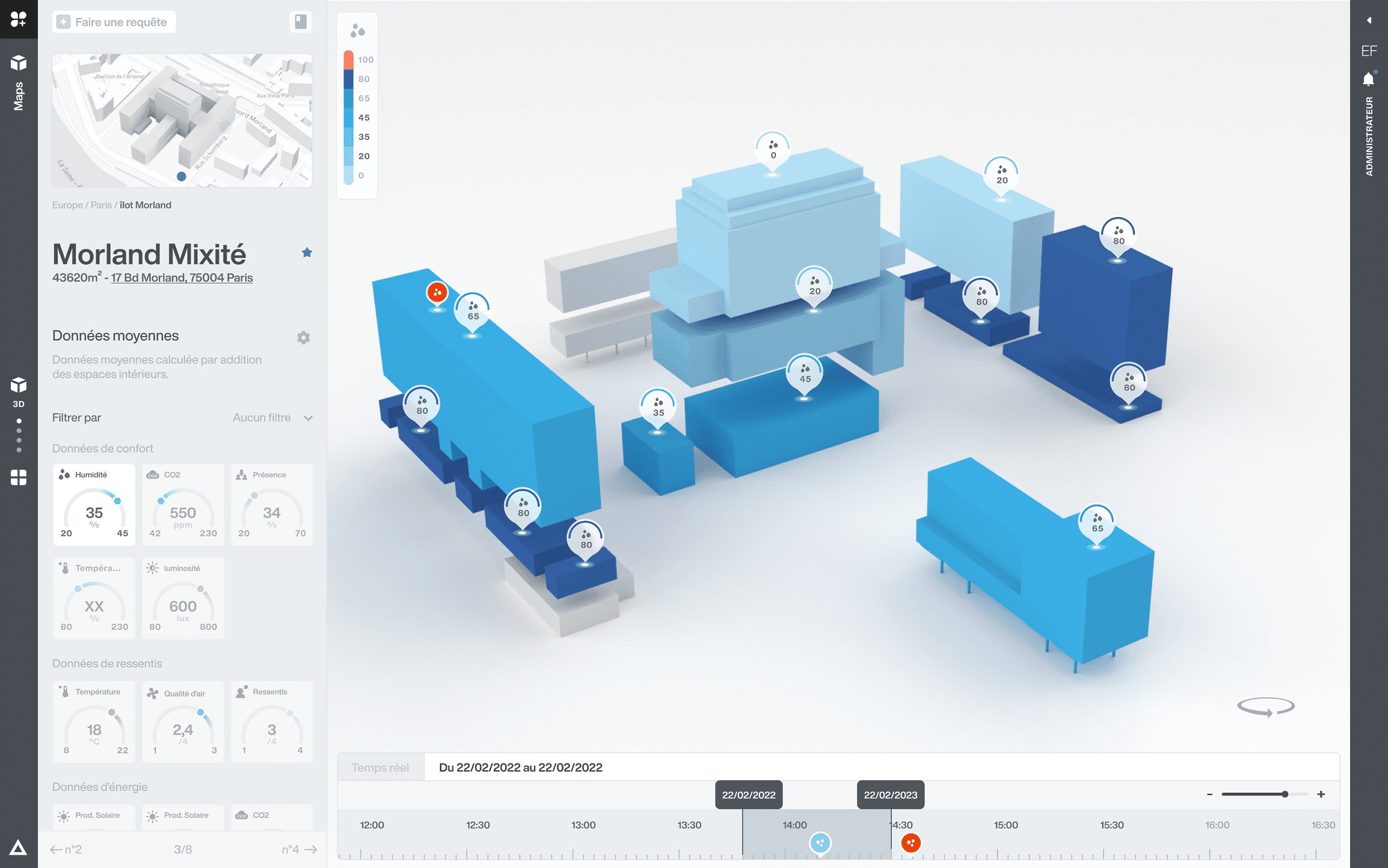
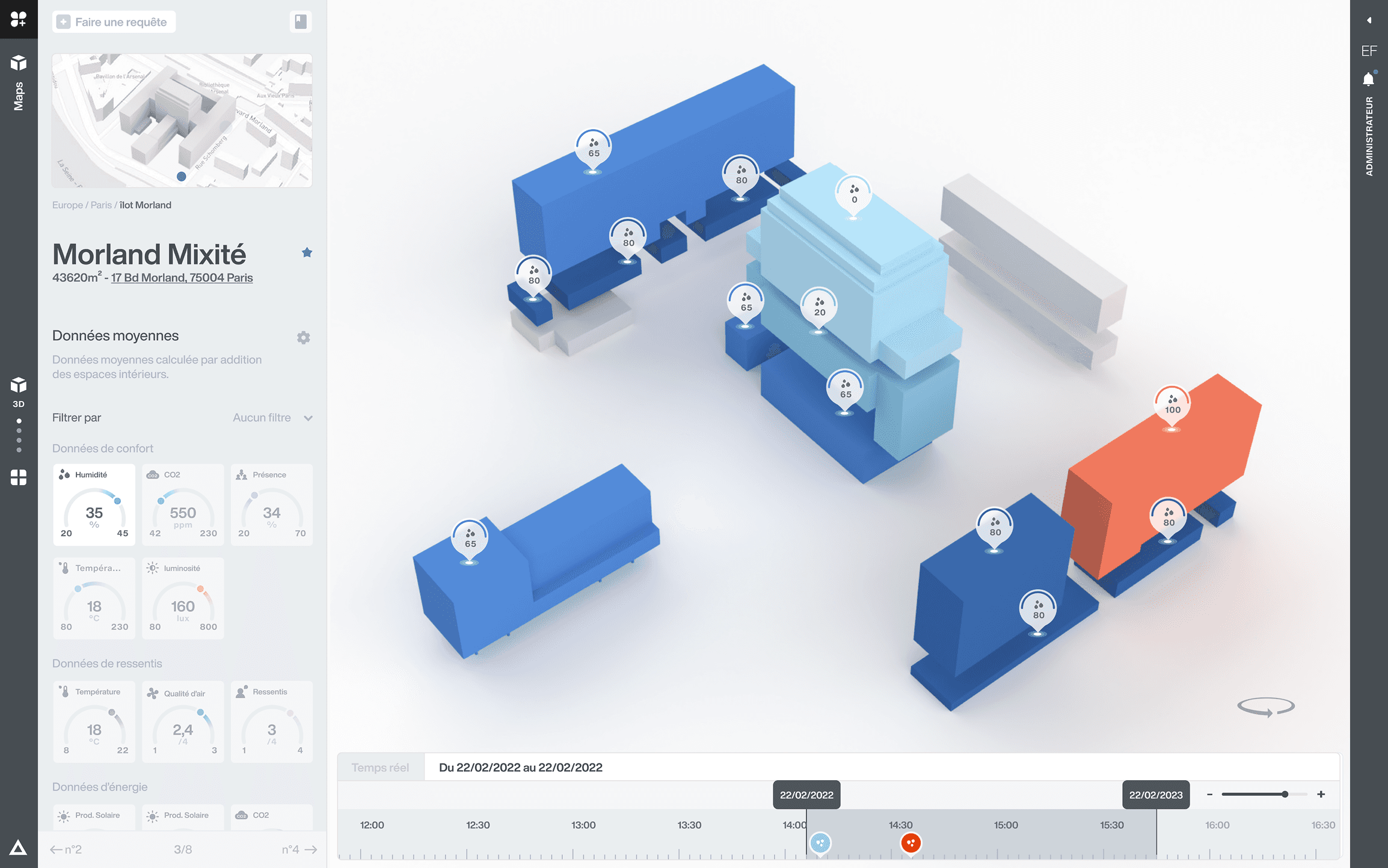
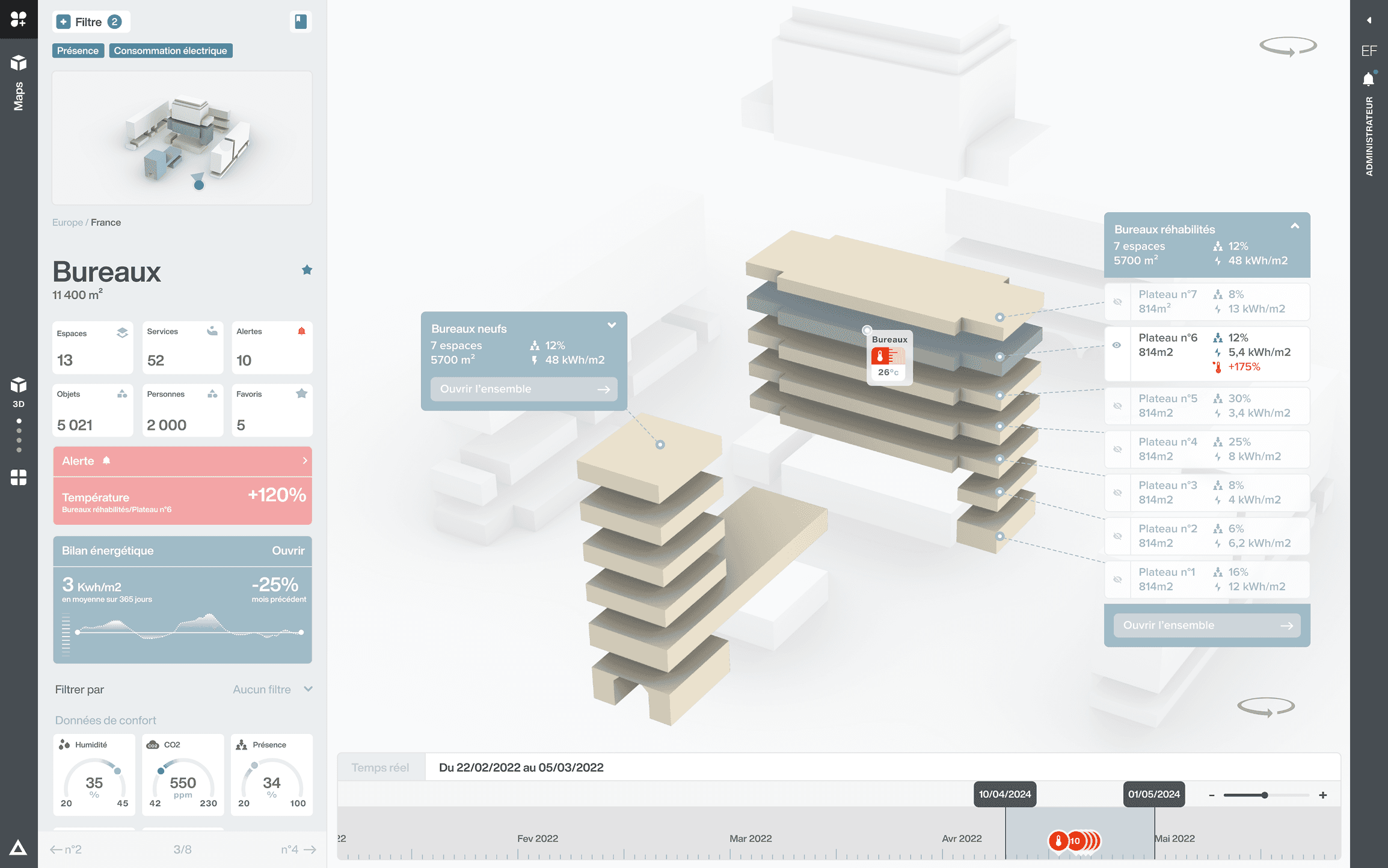
To make this complex system understandable, we designed a simplified 3D model of the building. Instead of focusing on architectural detail, the model emphasizes spatial logic and relationships. It visually connects distant spaces that function as part of the same environment, such as the different areas of a hotel, making it easier to reason in terms of usage rather than structure. This 3D representation became a shared reference for all stakeholders, aligning their understanding of the building. It also provided the spatial foundation needed to connect data, technical systems, and usage indicators in a clear and coherent way.
Creating software and interfaces to manage spaces.
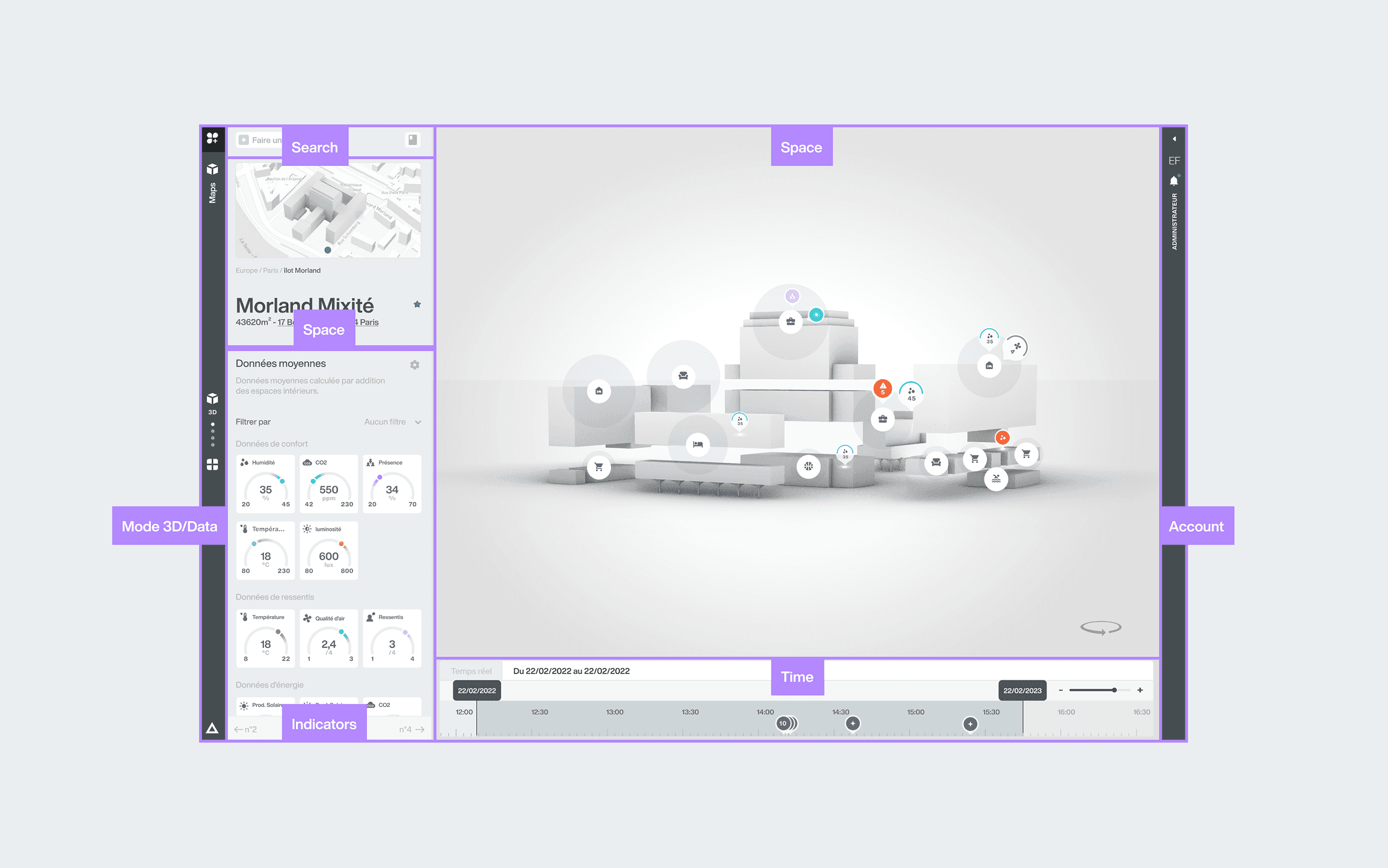
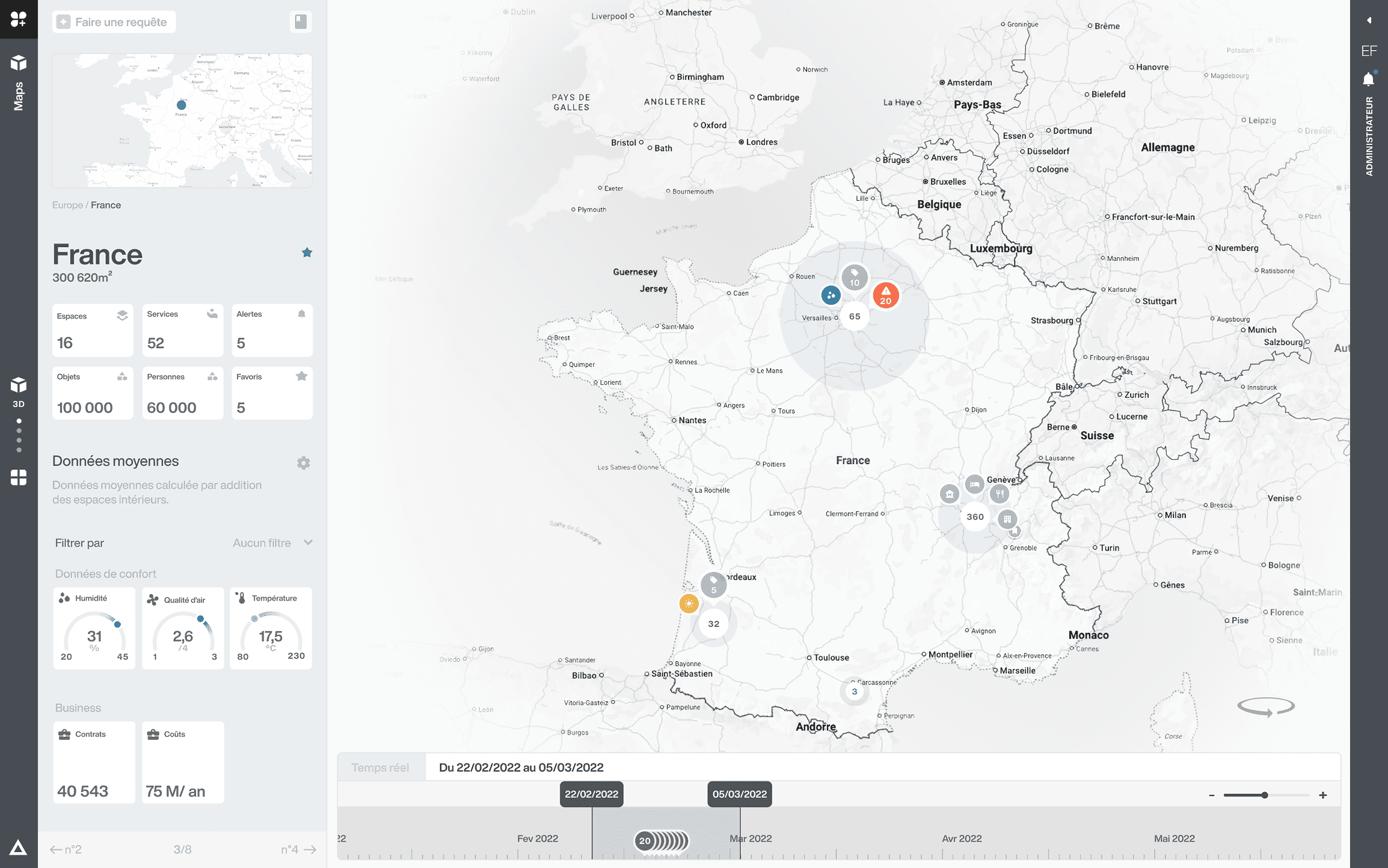
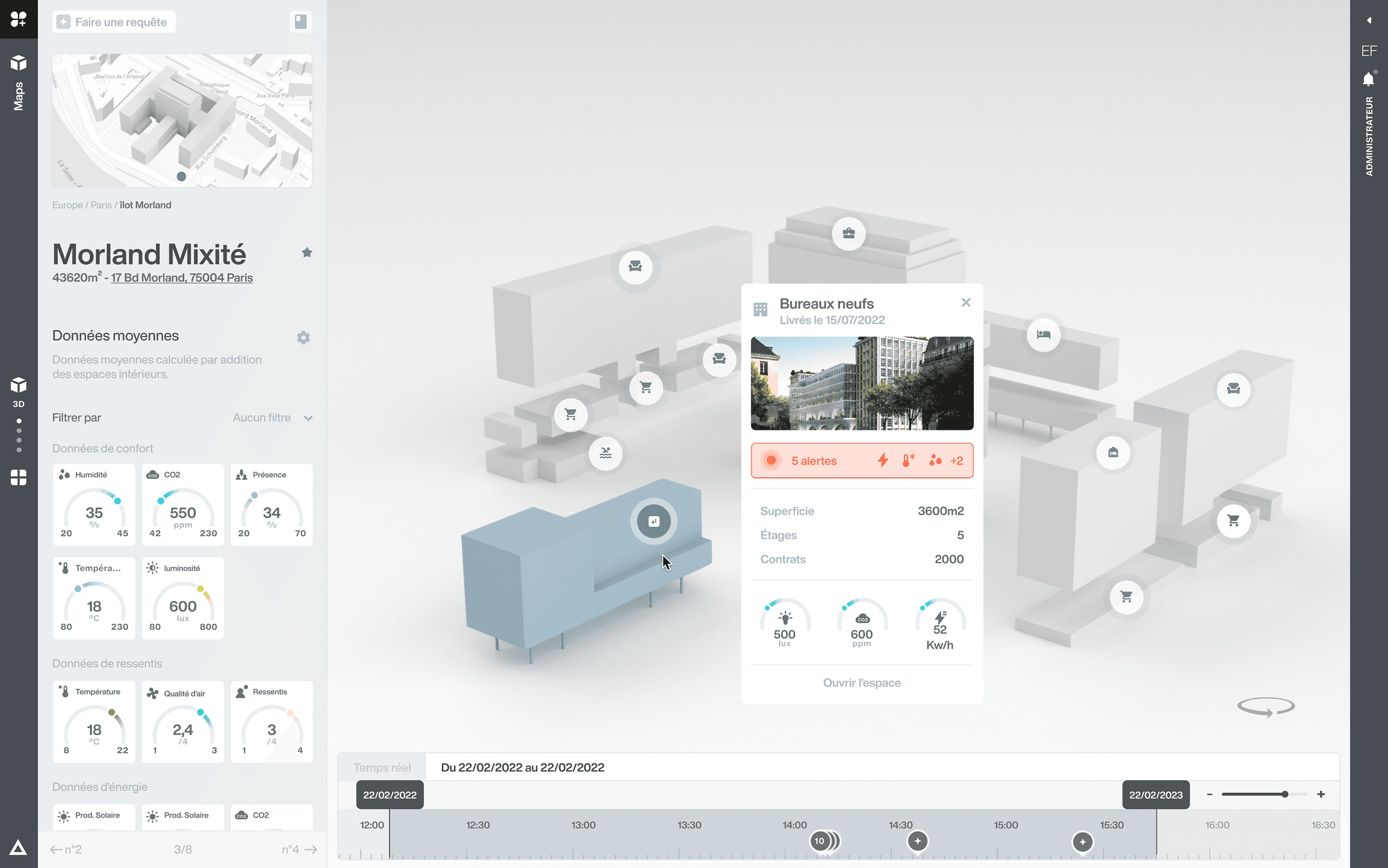
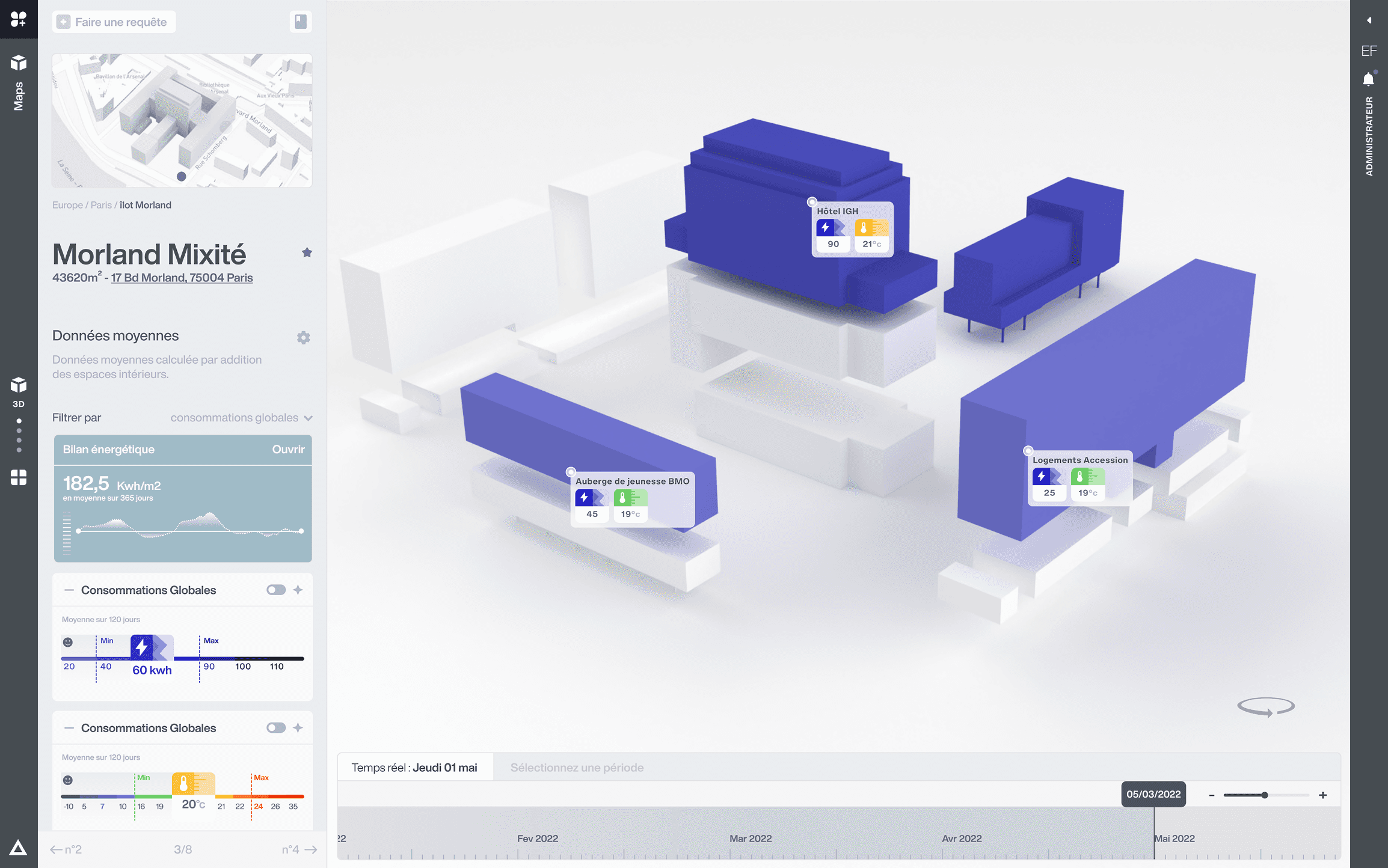
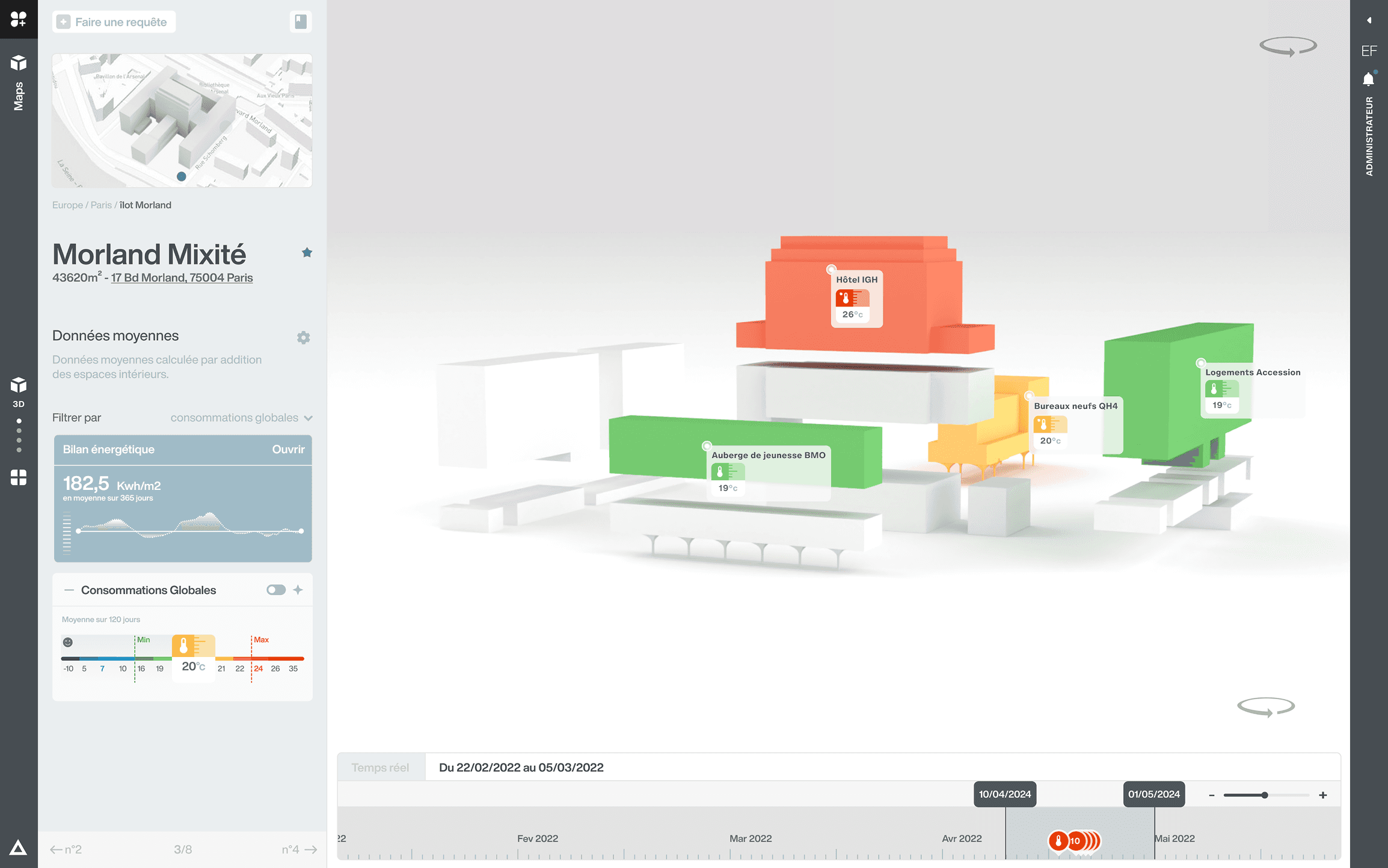
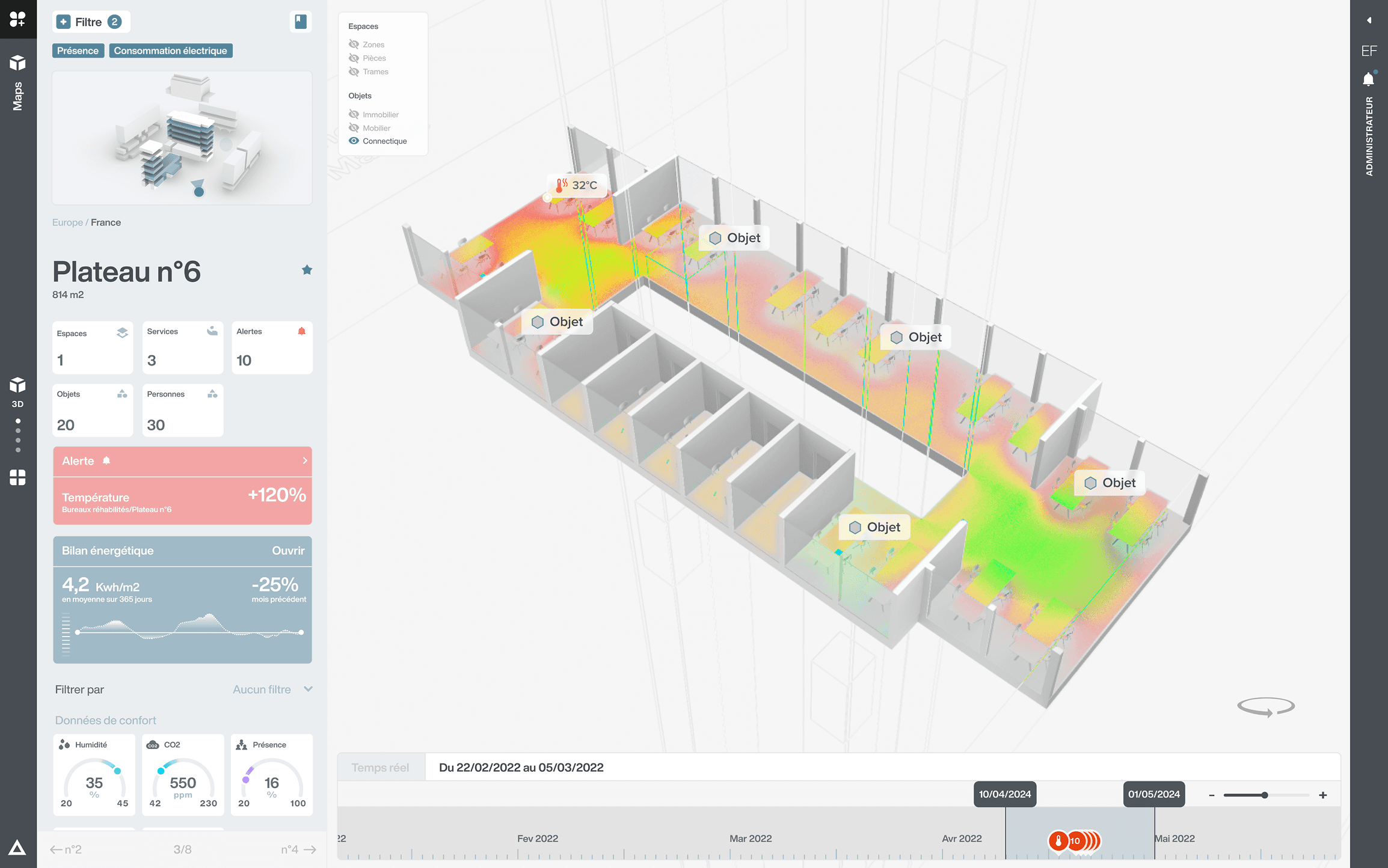
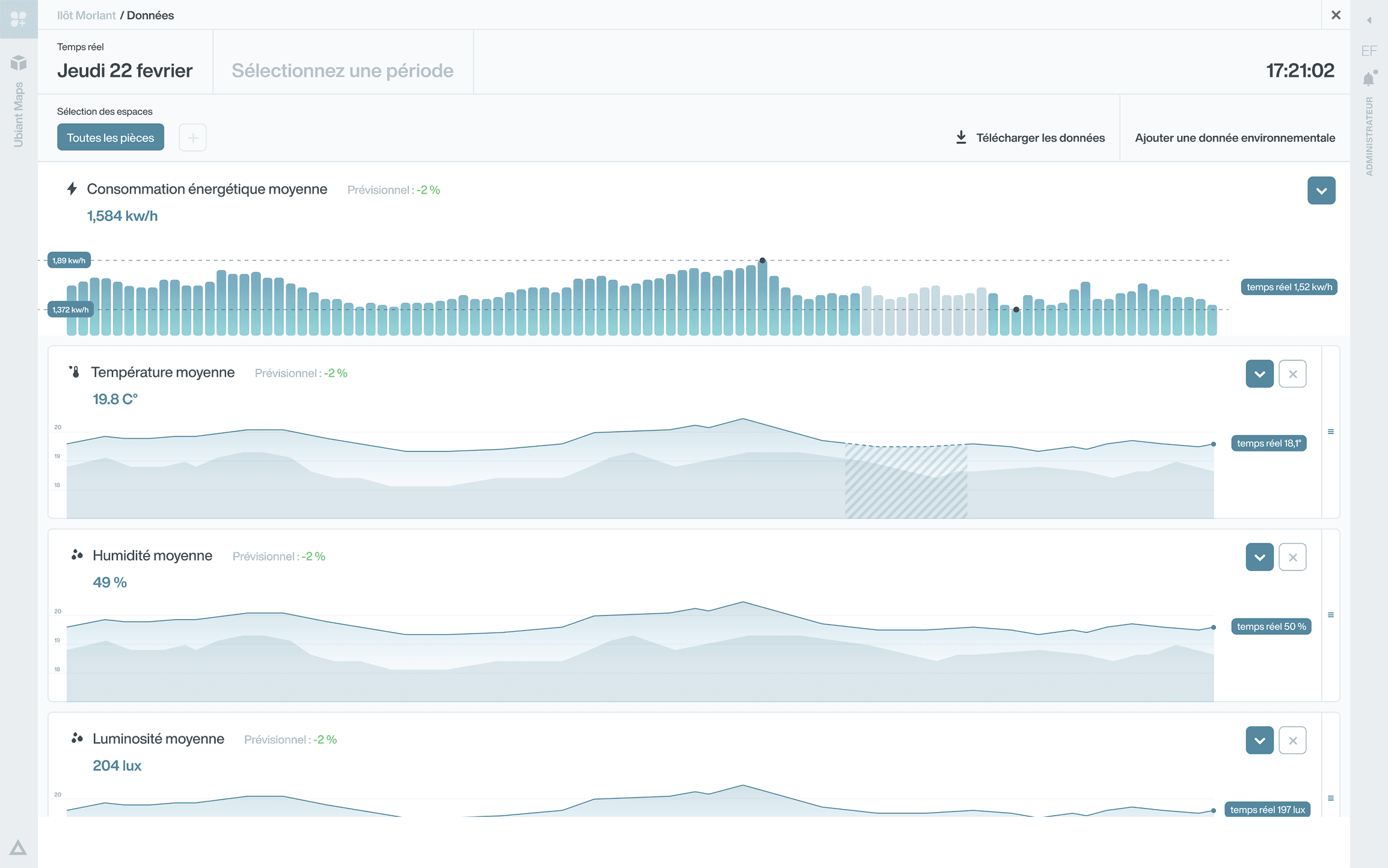
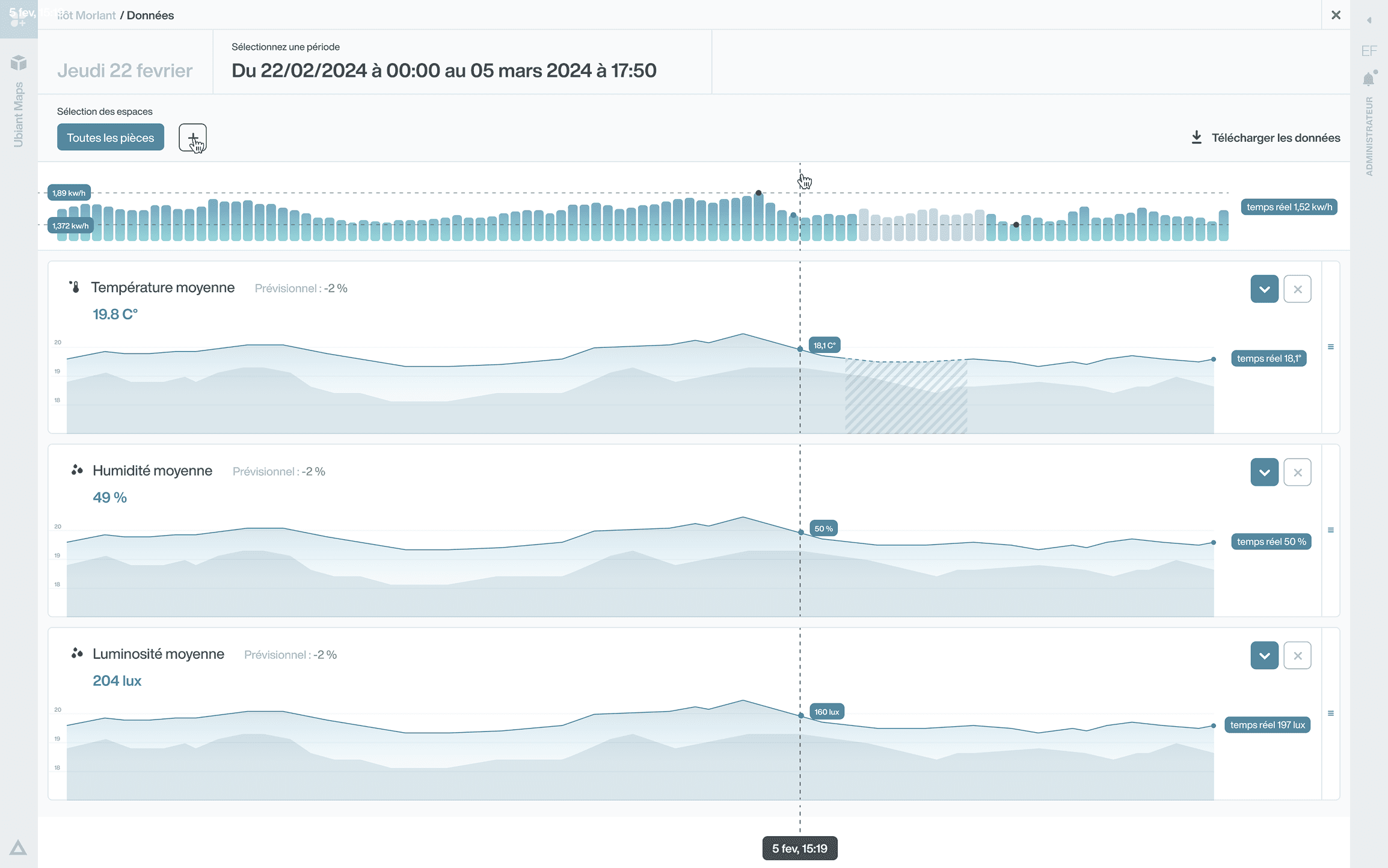
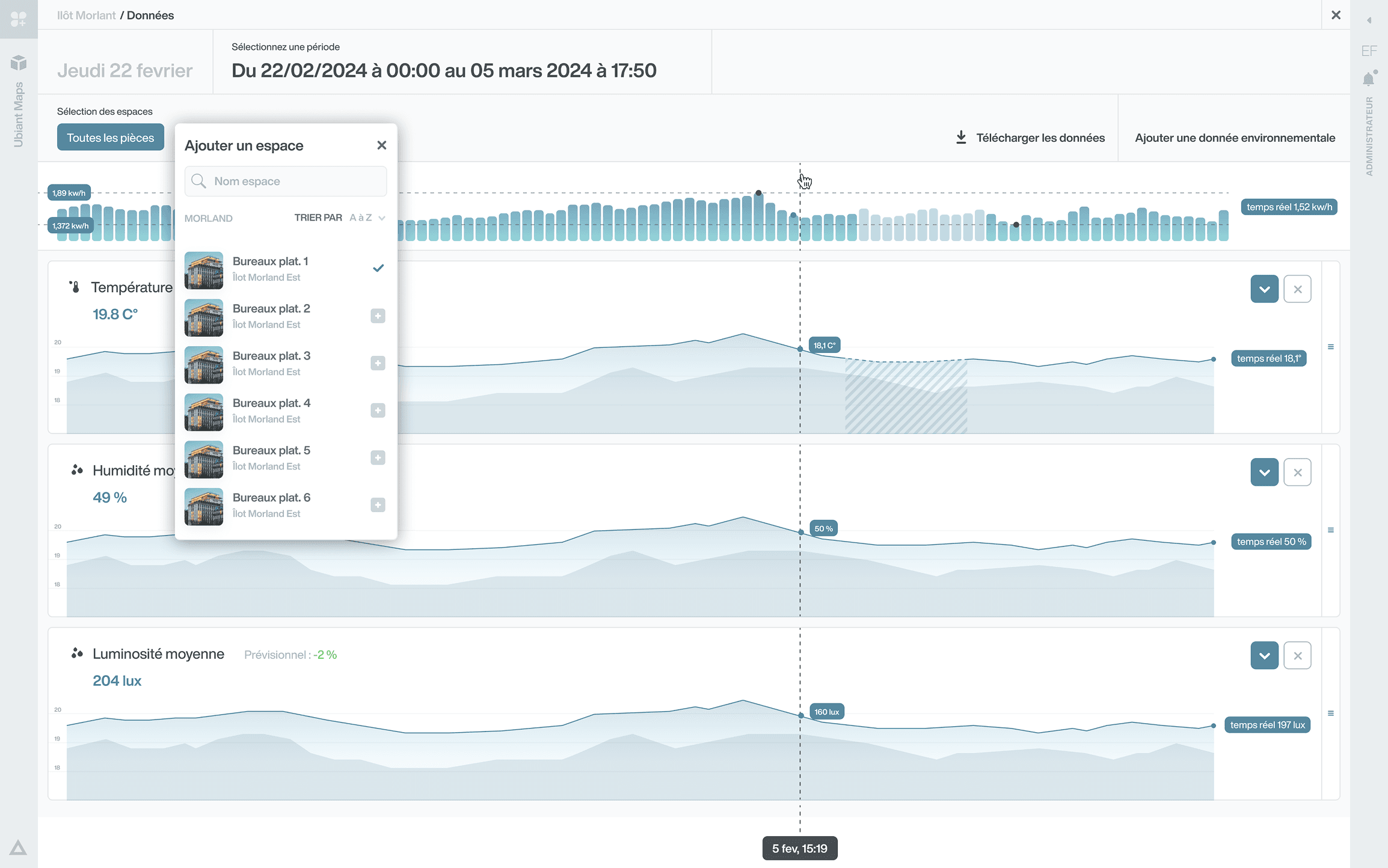
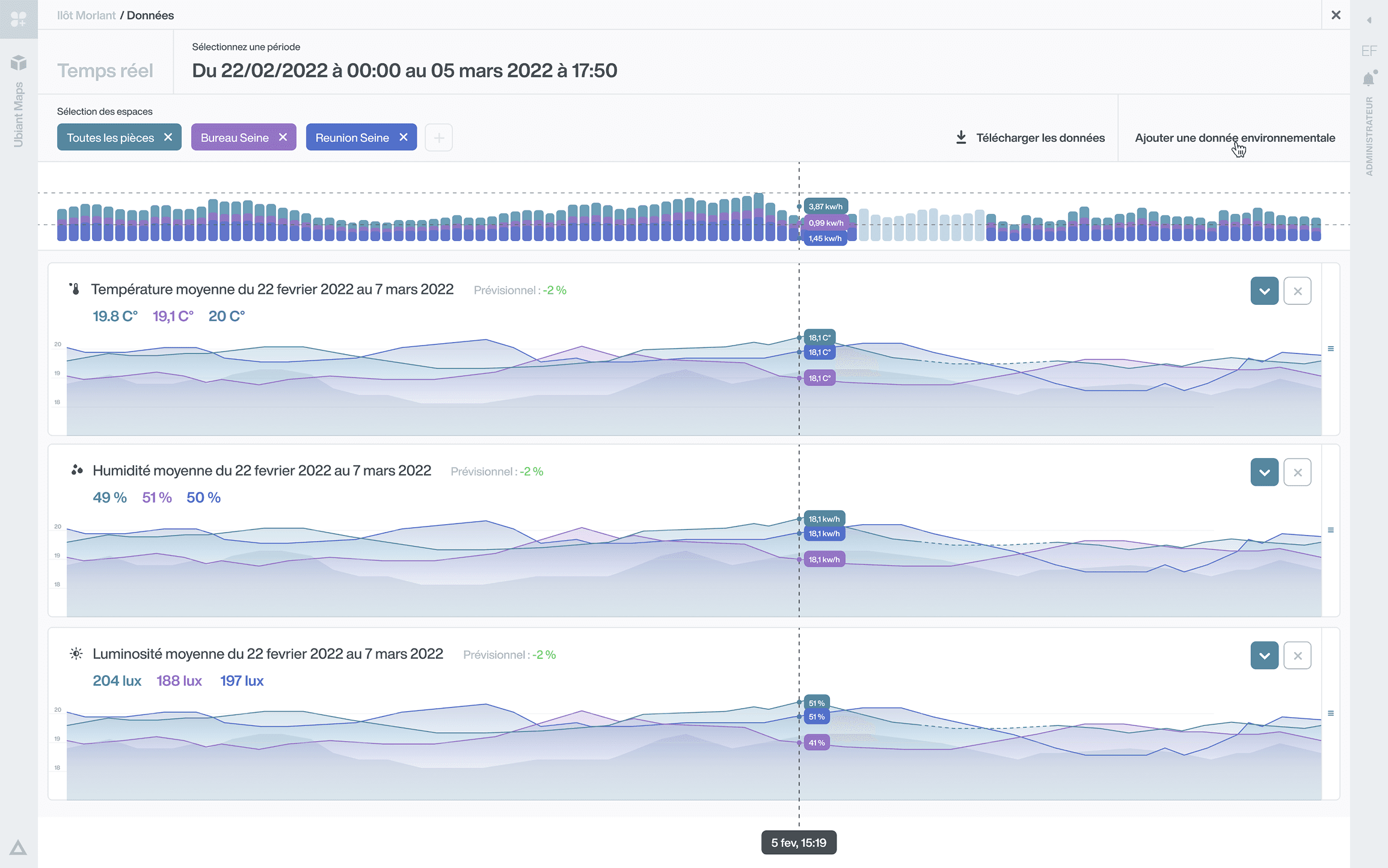
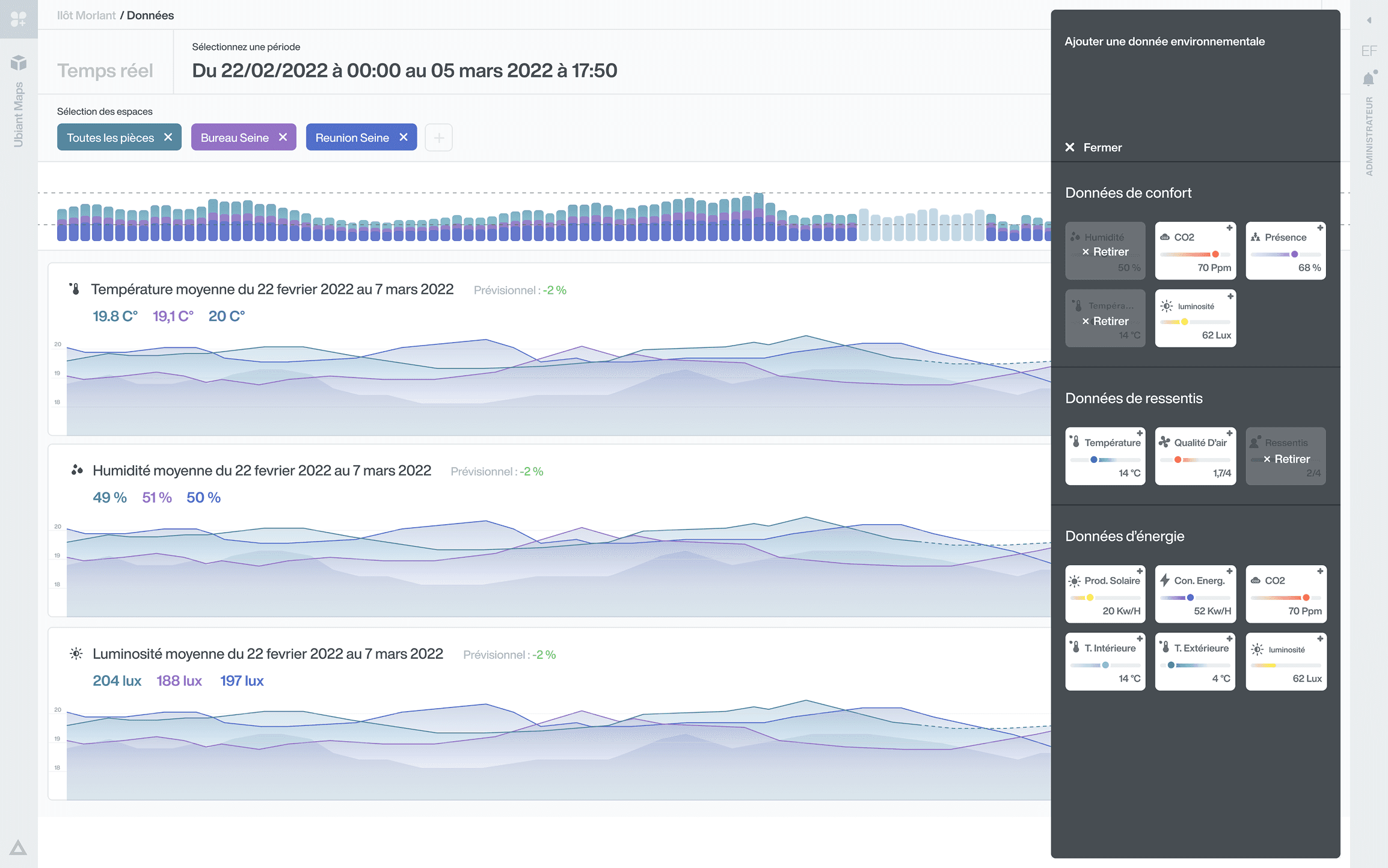
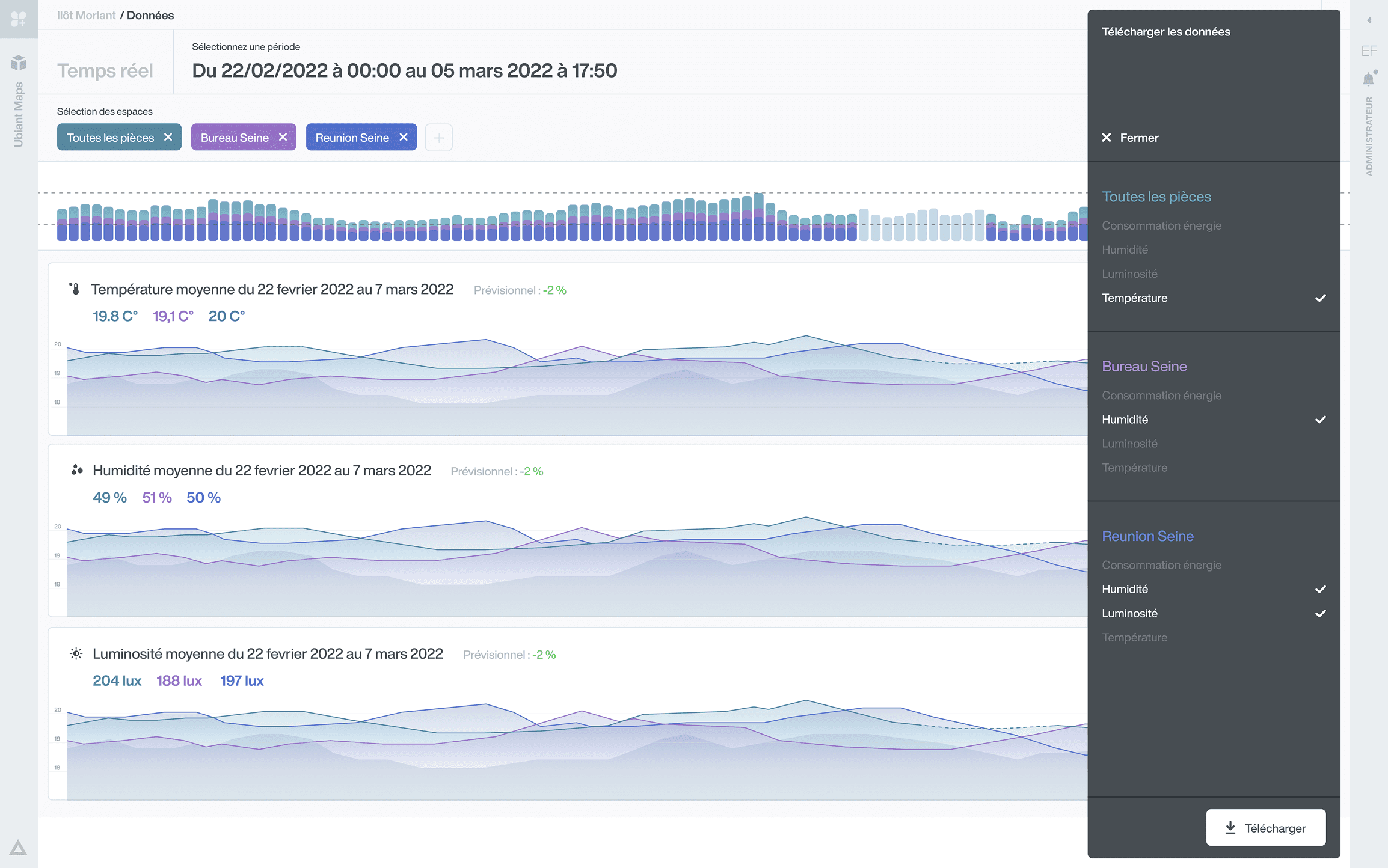
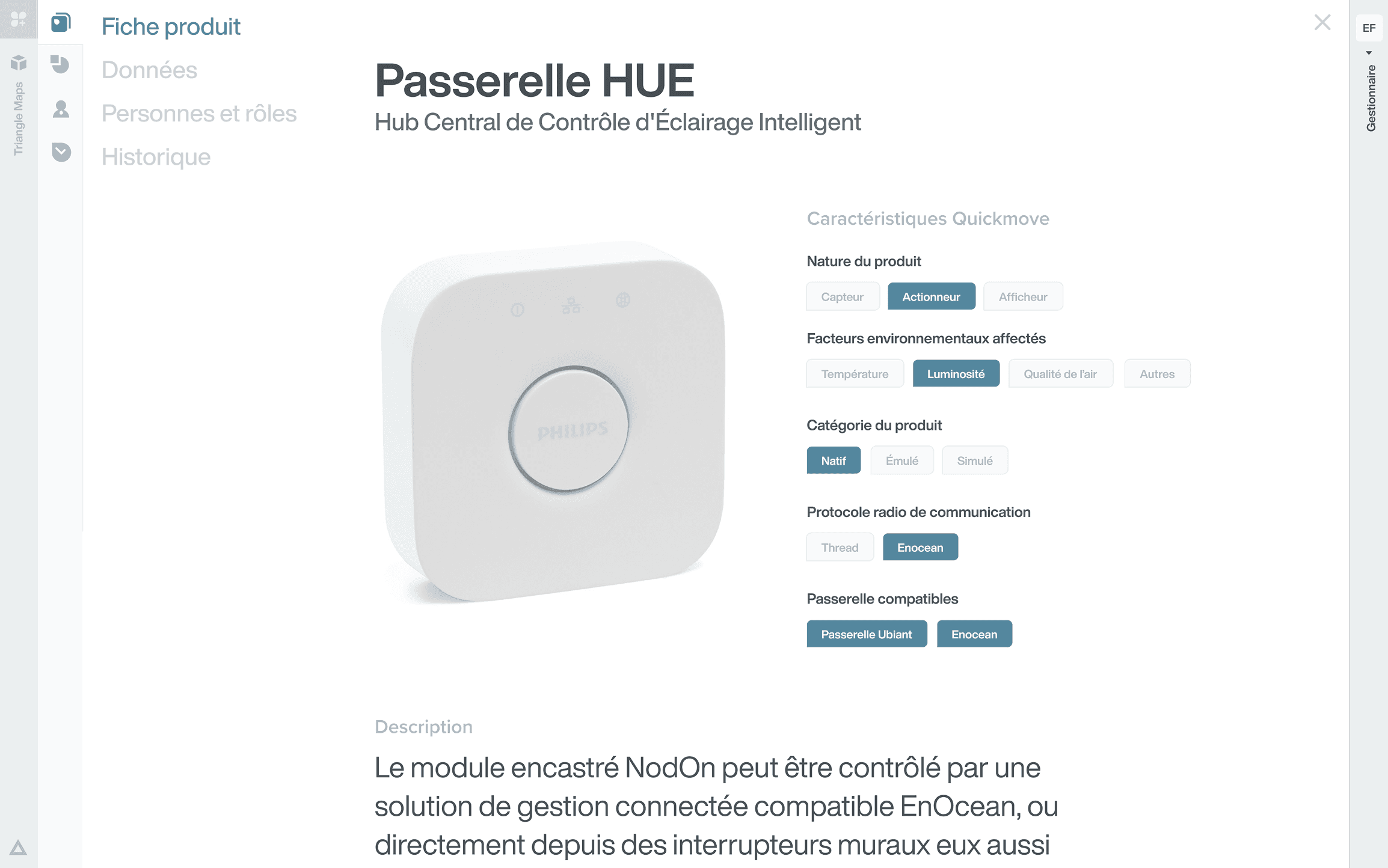
Building on this shared spatial model, we designed a complete software platform to manage spaces and technical systems remotely and nationwide. The interface adapts to different user profiles, providing access to relevant information for private and shared spaces when needed. It enables control of domotics, real time monitoring of occupancy, energy consumption, humidity, and light levels, and continuous observation of building usage. Rights and administration management allow external workers, such as technicians or maintenance teams, to access only the information required for their tasks.
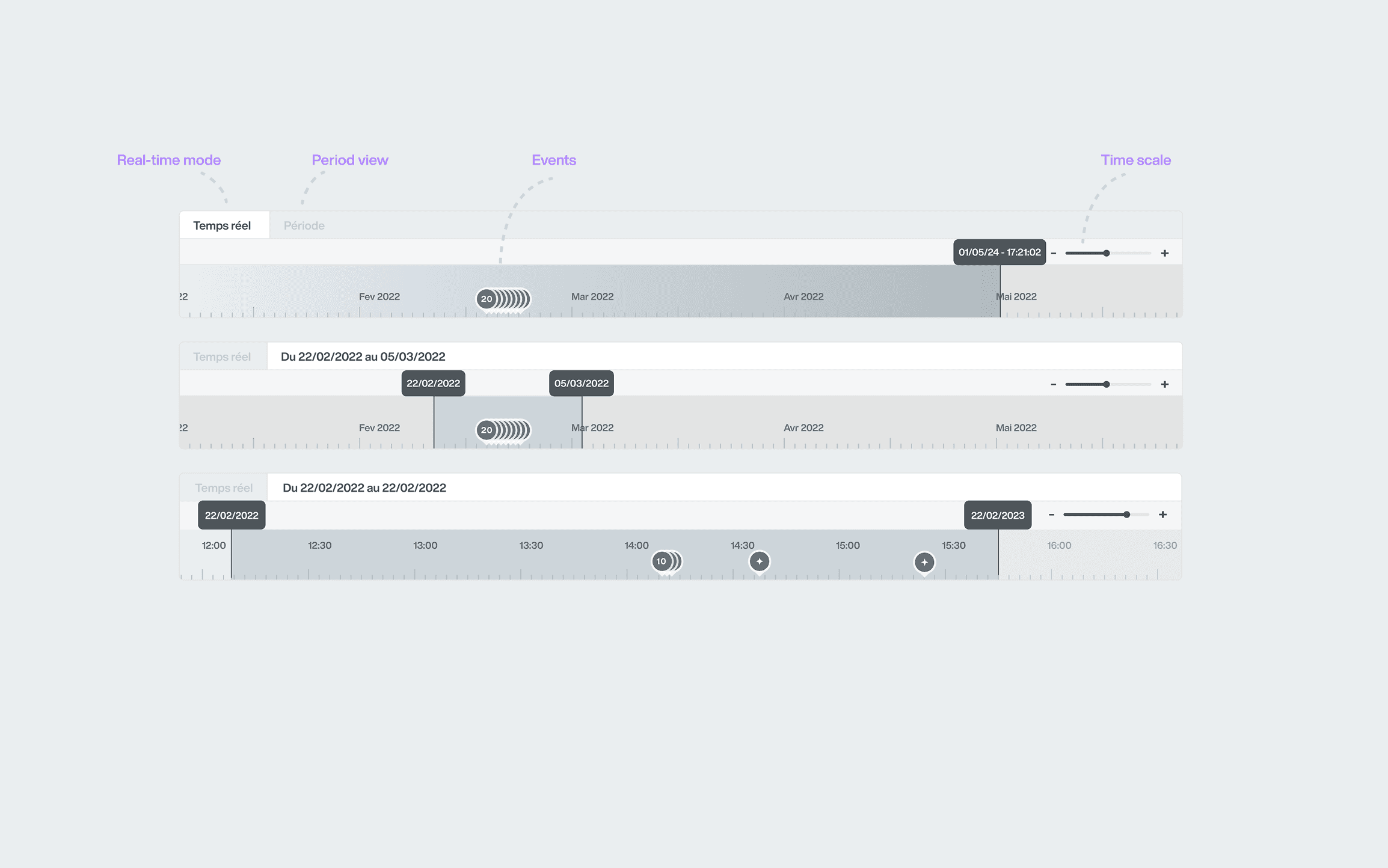
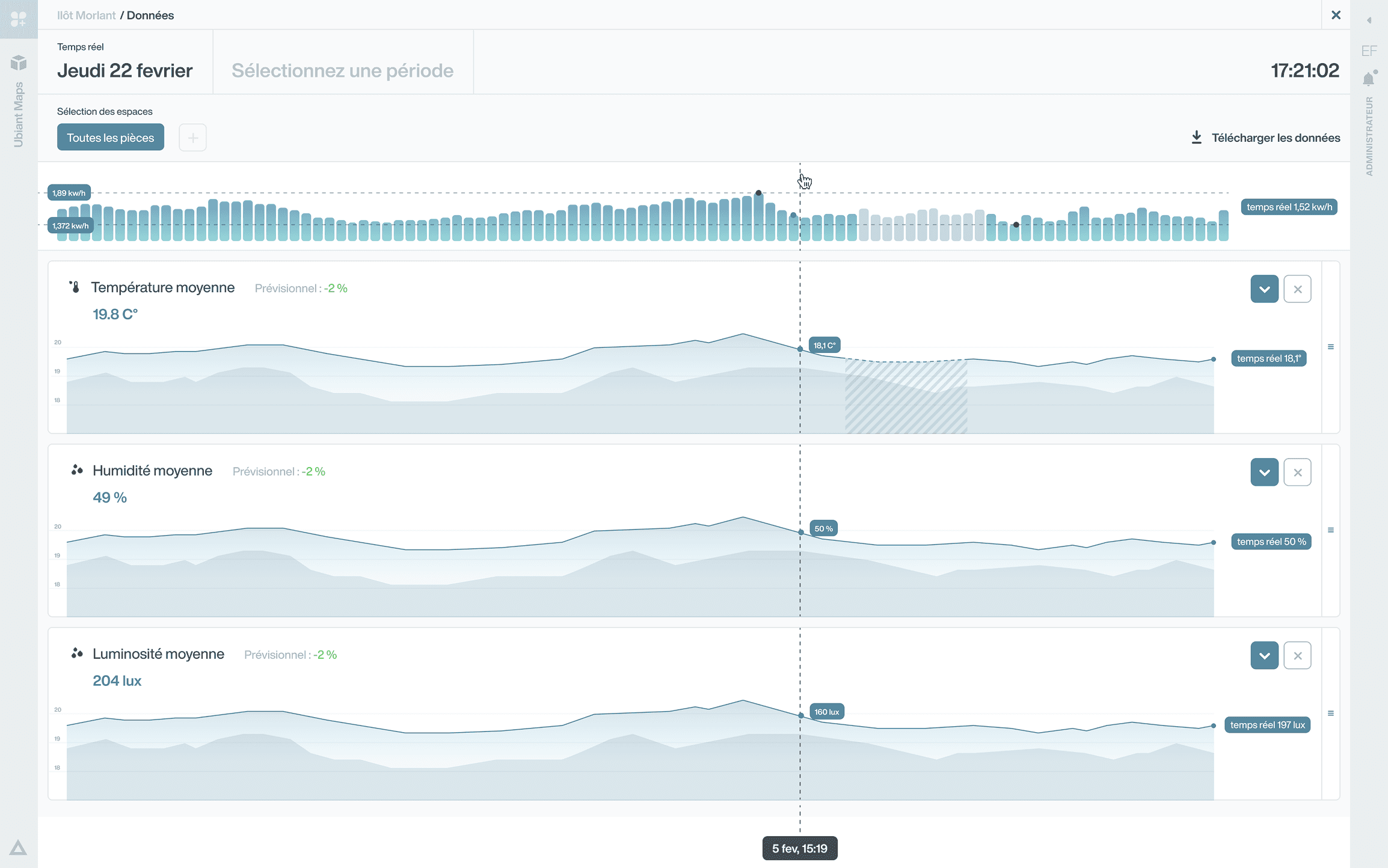
Designing an alert system timeline.
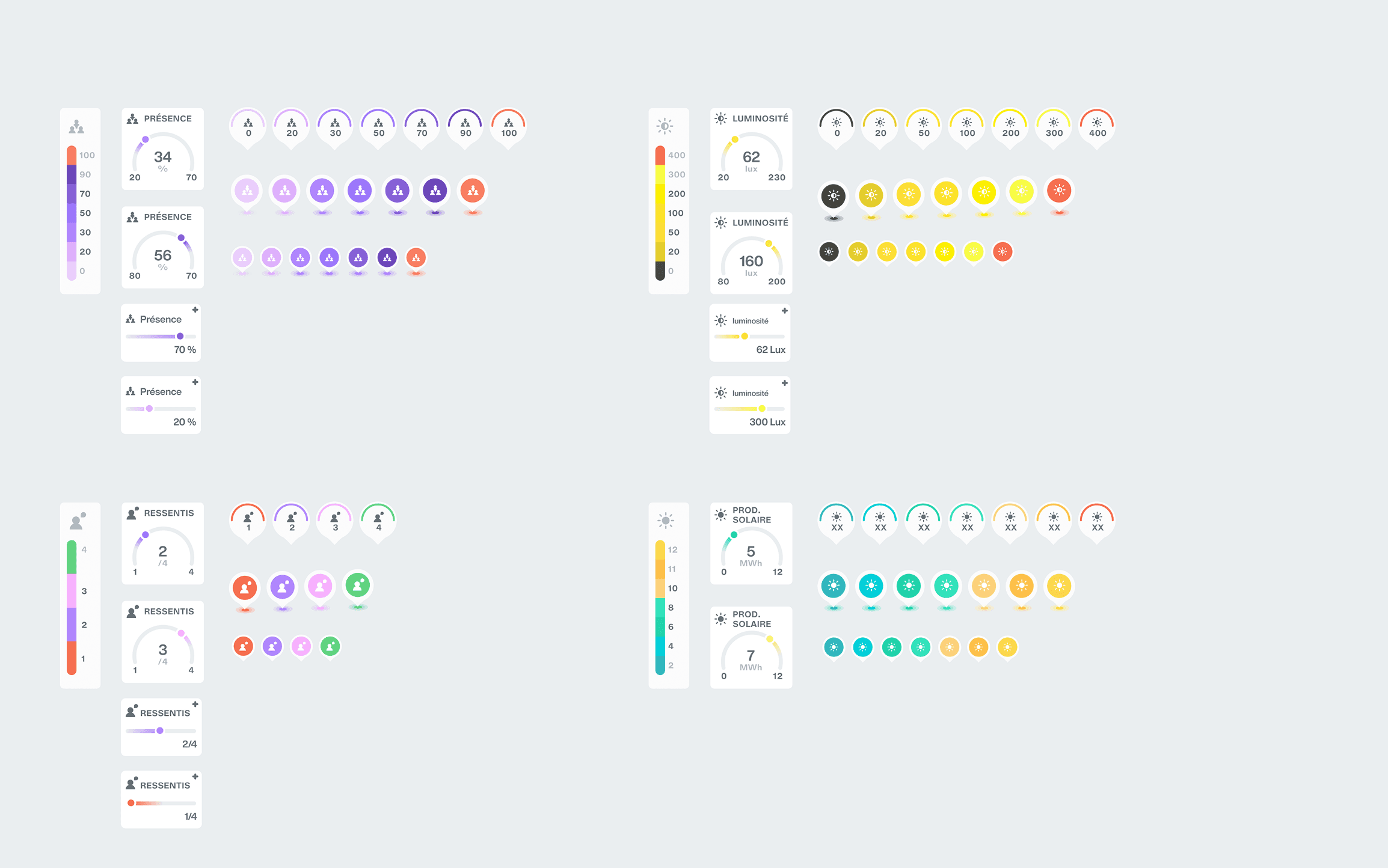
Designing indicators for comfort, energy, and usage.
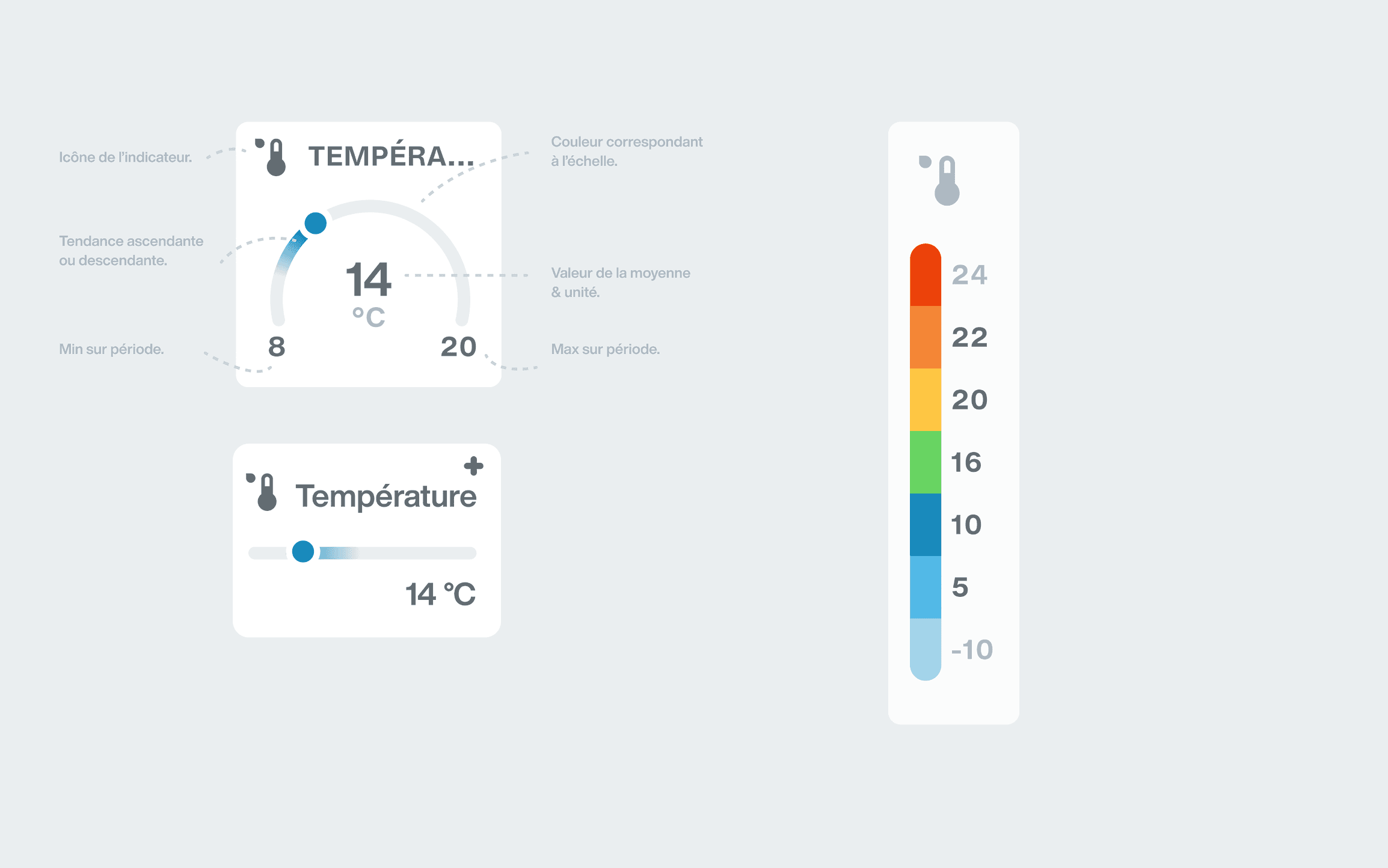
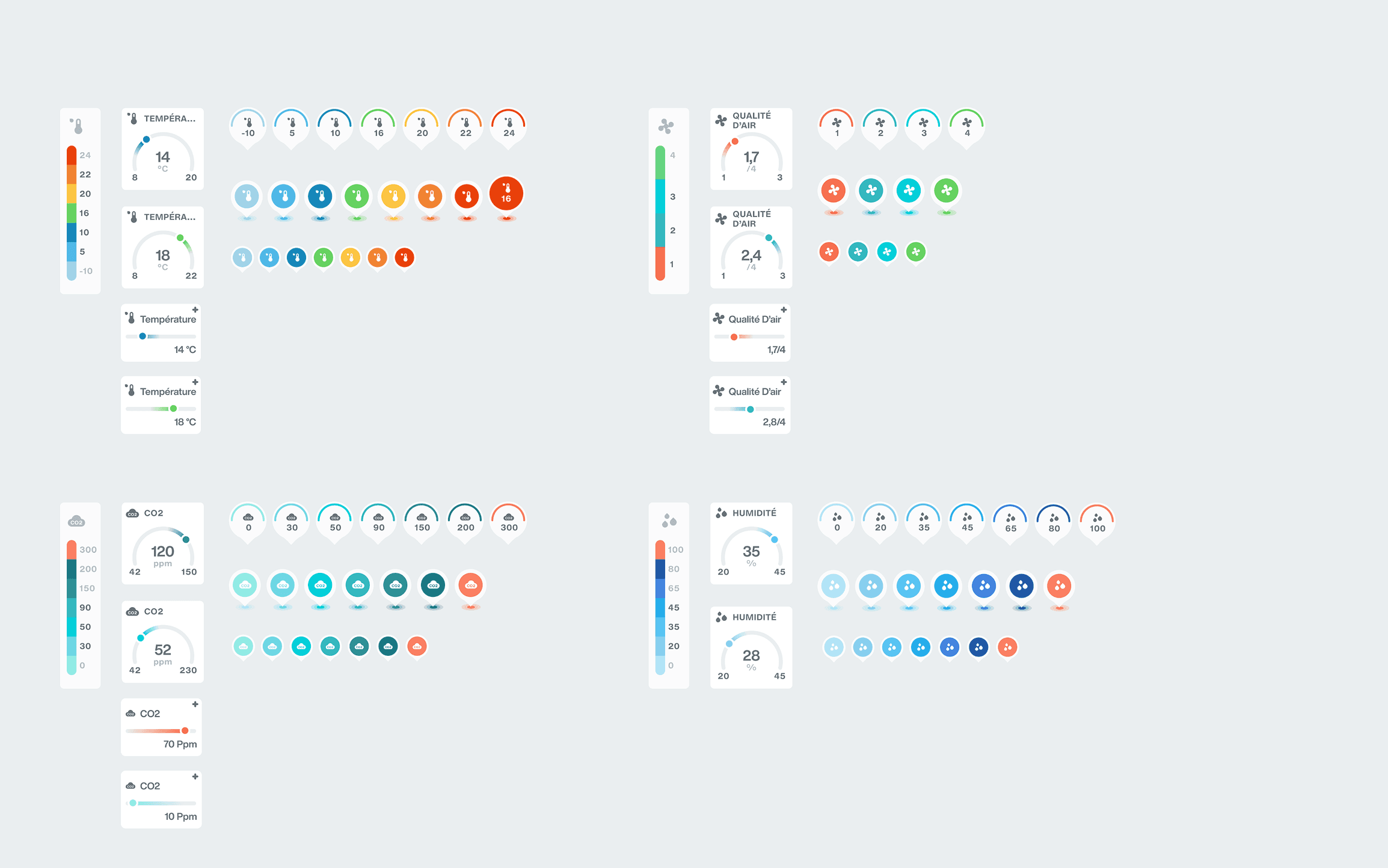
Last but not least, we designed a set of indicators that transform raw data into meaningful signals. Comfort, energy, occupancy, and usage indicators are built on calibrated scales and professional color codes, making them immediately readable. Color trails are used to show variations over time, with gradients on gauges revealing increases or decreases, for example in temperature or occupancy. These indicators are embedded directly within the spatial model, allowing anomalies, trends, and correlations to be identified at a glance.
A functional digital twin.
The result is a fully functional digital twin that connects environment, spaces, data, machines, and time into a single system. Morland Mixité Capitale can now be managed through precise, real time information about usage, population, comfort, and energy consumption. The platform enables continuous improvement by anticipating variations in usage and climate, adapting energy strategies, and designing services based on actual needs. The digital twin becomes a shared tool for understanding the building, managing it collectively, and supporting long term performance.