Intro - luxe
Gauche
header-cas
Enhance the passenger experience across RATP (Parisian public transport systems) networks by designing an intelligent voice assistant able to deliver real-time traffic updates and departure times.
Solution
A voice assistant combining advanced conversational design for smooth, human-like interaction, embodied in a tangible, coherent object.

Giving voice to public transport.
As part of its innovation strategy, Paris’s public transport operator RATP, through its Passenger Information & Digital Department, partnered with Souffl and Snips, a French pioneer in AI-based voice interfaces. The goal was to design a conversational assistant capable of delivering real-time metro, tram, and RER information in natural language. This initiative aimed both to raise internal awareness of emerging voice technologies and to prototype a new kind of public service experience, accessible to everyone, including non-digital users, directly in the station environment.
Defining the perimeter.
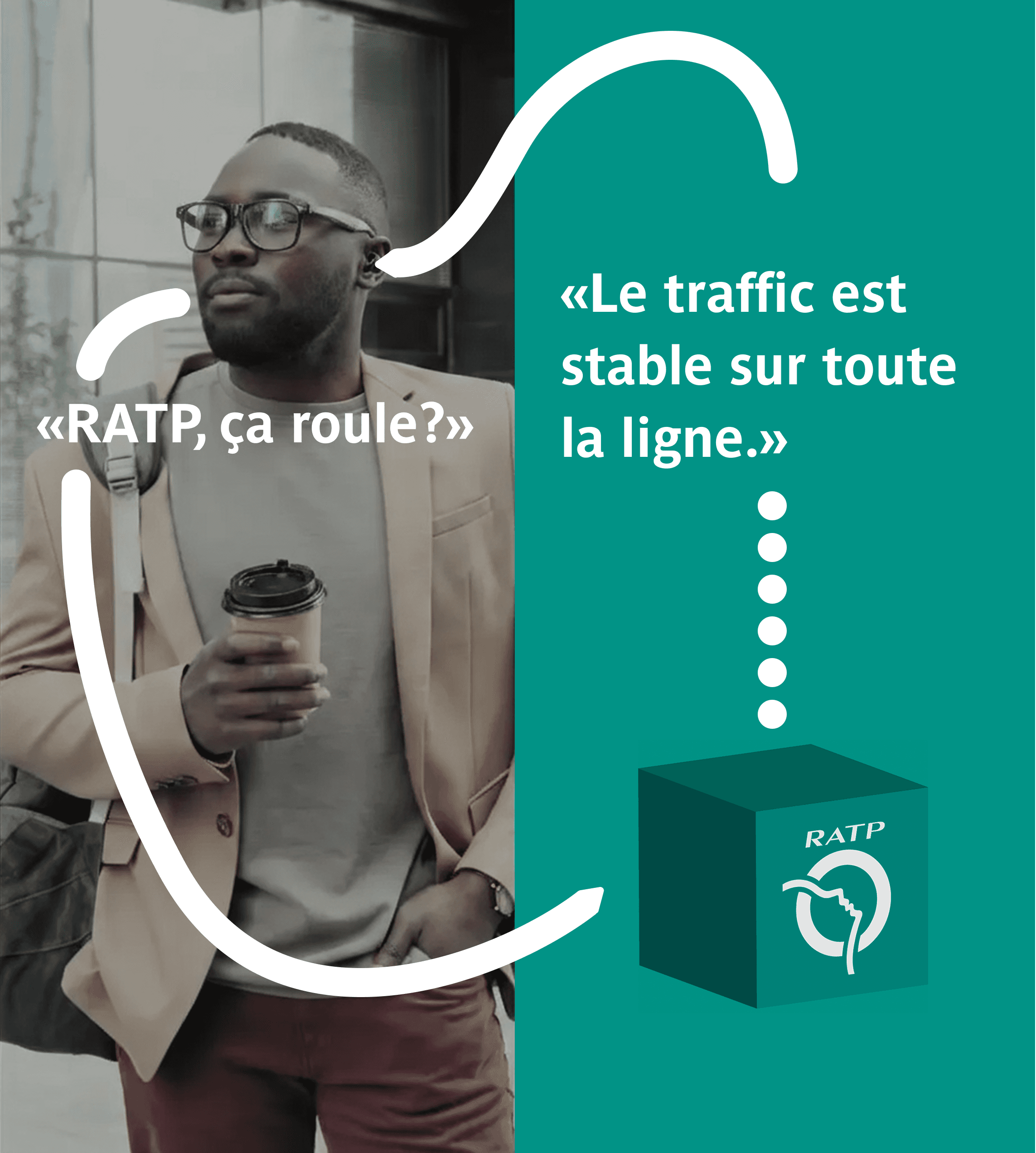
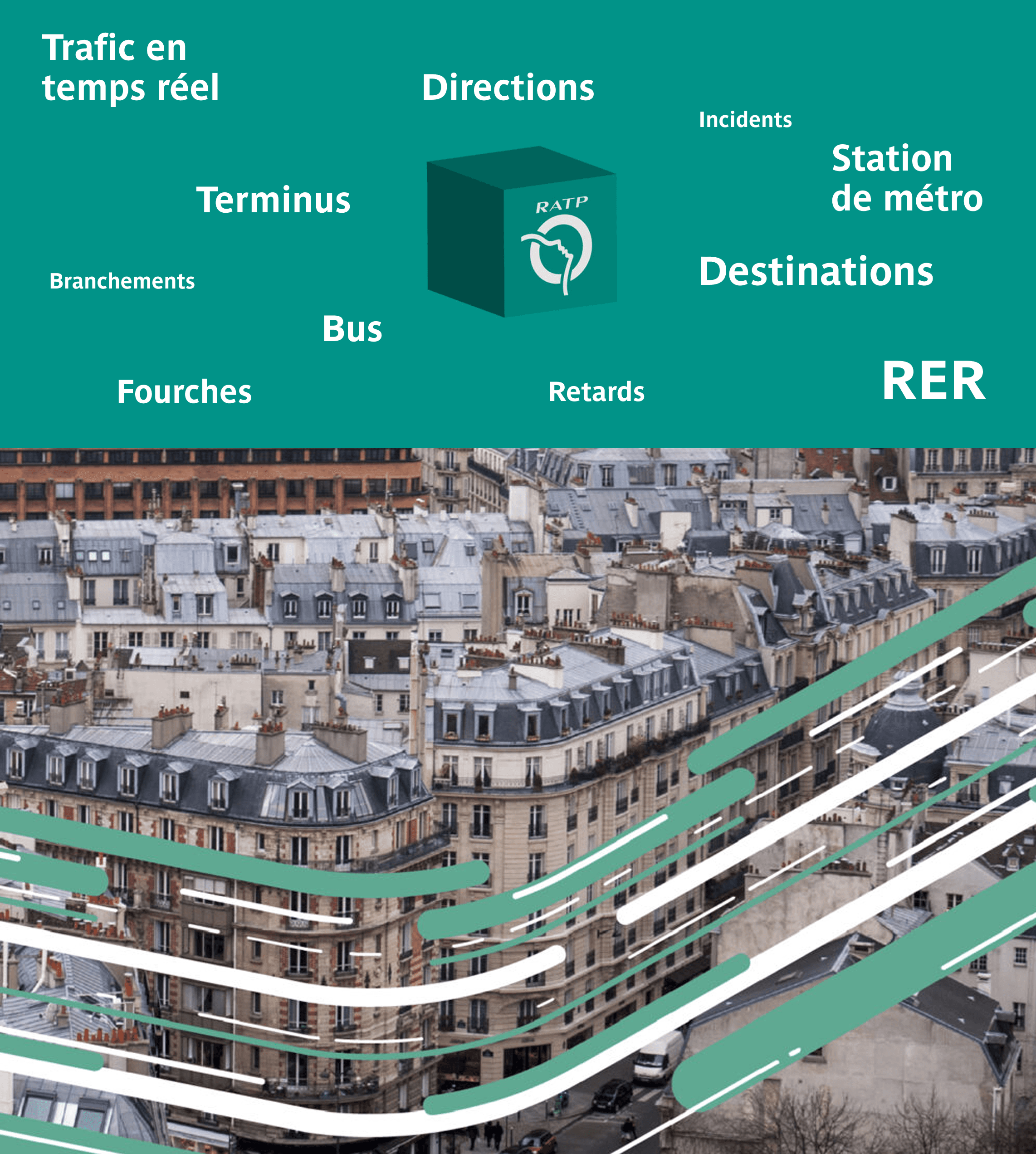
Before designing the dialogue itself, the team first defined the assistant’s functional scope and which questions it should answer and how. Two main requests were prioritized: next train departures and overall traffic status. Each was then broken into concrete use cases, from “next train at a given station” to “connection between two stops.” This groundwork provided a clear framework for designing dialogue logic, anticipating user expectations, and ensuring that the assistant could deliver relevant, efficient answers to the most frequent traveler needs.

Teaching the AI to speak human.
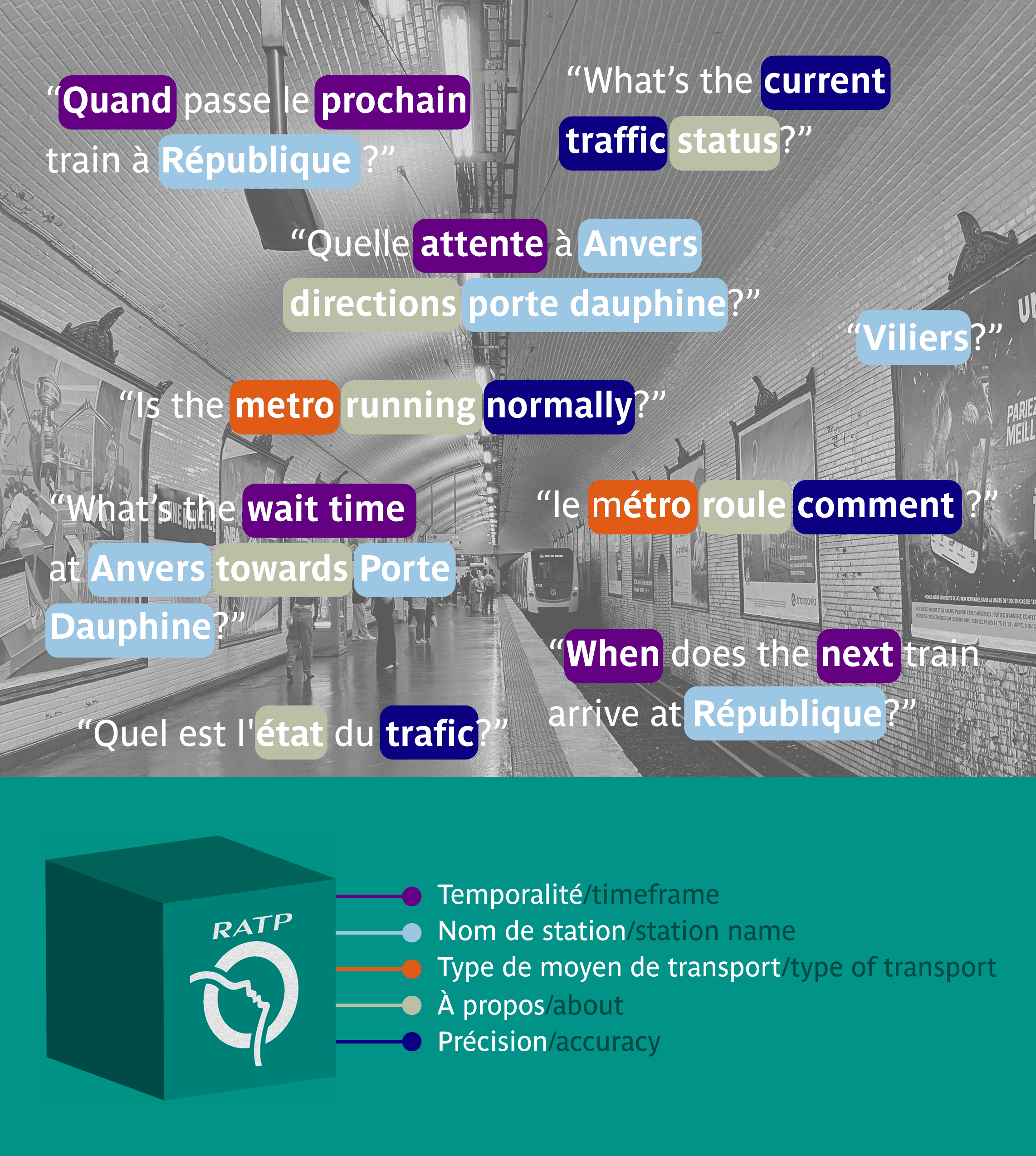
Souffl collaborated with Snips to train the voice assistant’s AI around real linguistic patterns. The goal was to recognize user intent regardless of how a question was phrased. Dozens of natural sentences such as “When’s the next RER A at Nation?” or “How long till the metro at Opéra?” were used to build the dataset. This allowed the AI to interpret meaning rather than syntax. The result was a system able to understand varied, imprecise, or incomplete user queries while maintaining reliability and fluidity in its responses.
Finding the right tone.
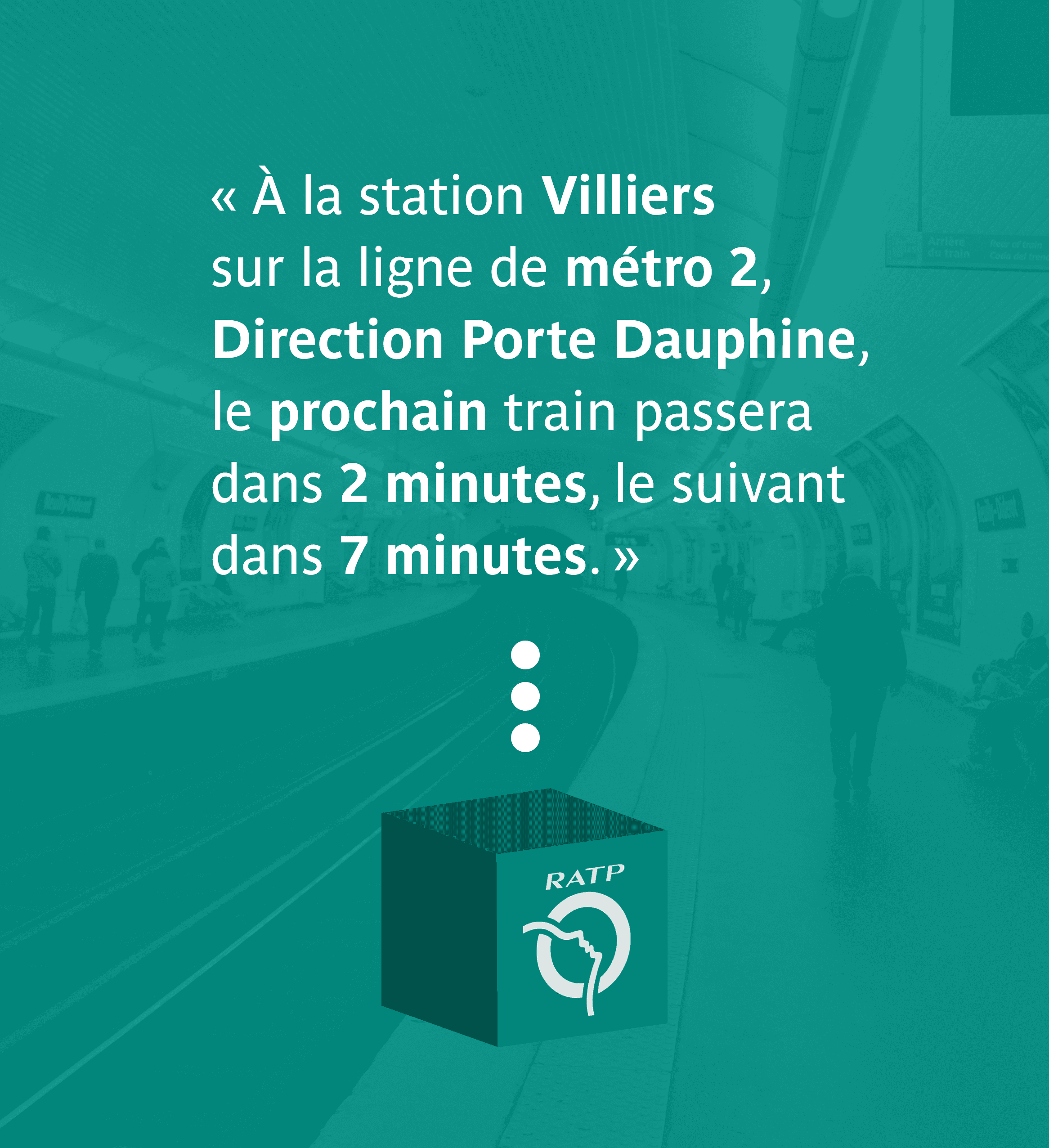
Souffl then focused on crafting the assistant’s response language, the balance between words, structure, and tone. Each term was carefully chosen to match RATP’s official terminology, ensuring precision and instant comprehension. The tone was neutral yet empathetic, professional yet human, designed to feel natural to every traveler. Whether for a rushed commuter or a lost tourist, each interaction aimed to be clear, calm, and trustworthy, reducing friction and fostering trust in an environment too often chaotic and marked by urgency.
Giving form to the voice.
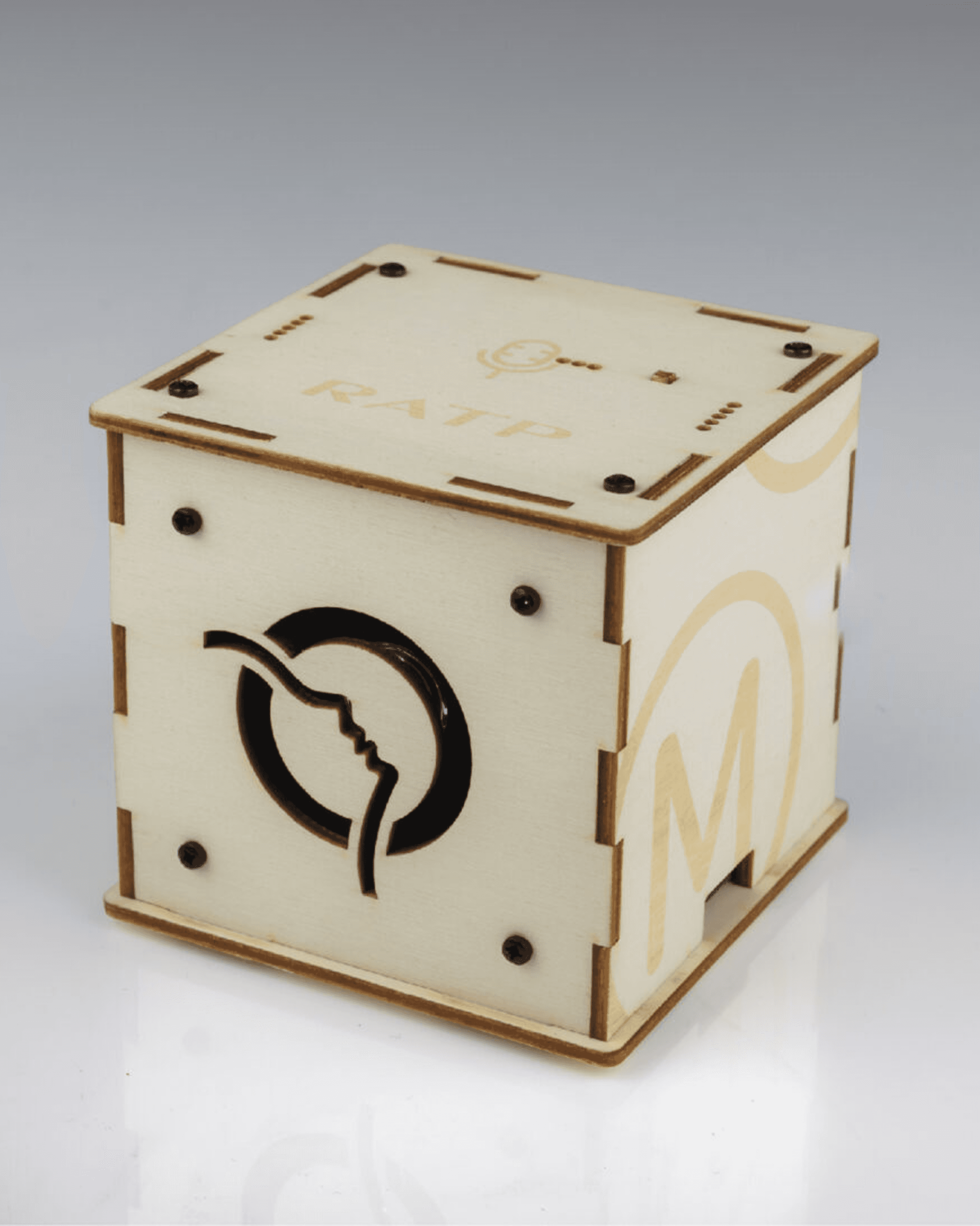
We also designed the object hosting the assistant: a minimalist wooden cube, laser-engraved and easily reproducible. Warm and tactile, it broke from the usual tech aesthetics while ensuring affordability and durability. Inside, a Raspberry Pi powered Snips’ privacy-by-design AI, performing voice recognition locally, meaning that no data ever left the device.
From prototype to deployment.
Five prototypes were produced and delivered to RATP for testing and experimentation. They are now deployed across various RATP departments and innovation labs.
Redefining the very idea of public information.t-ready model.
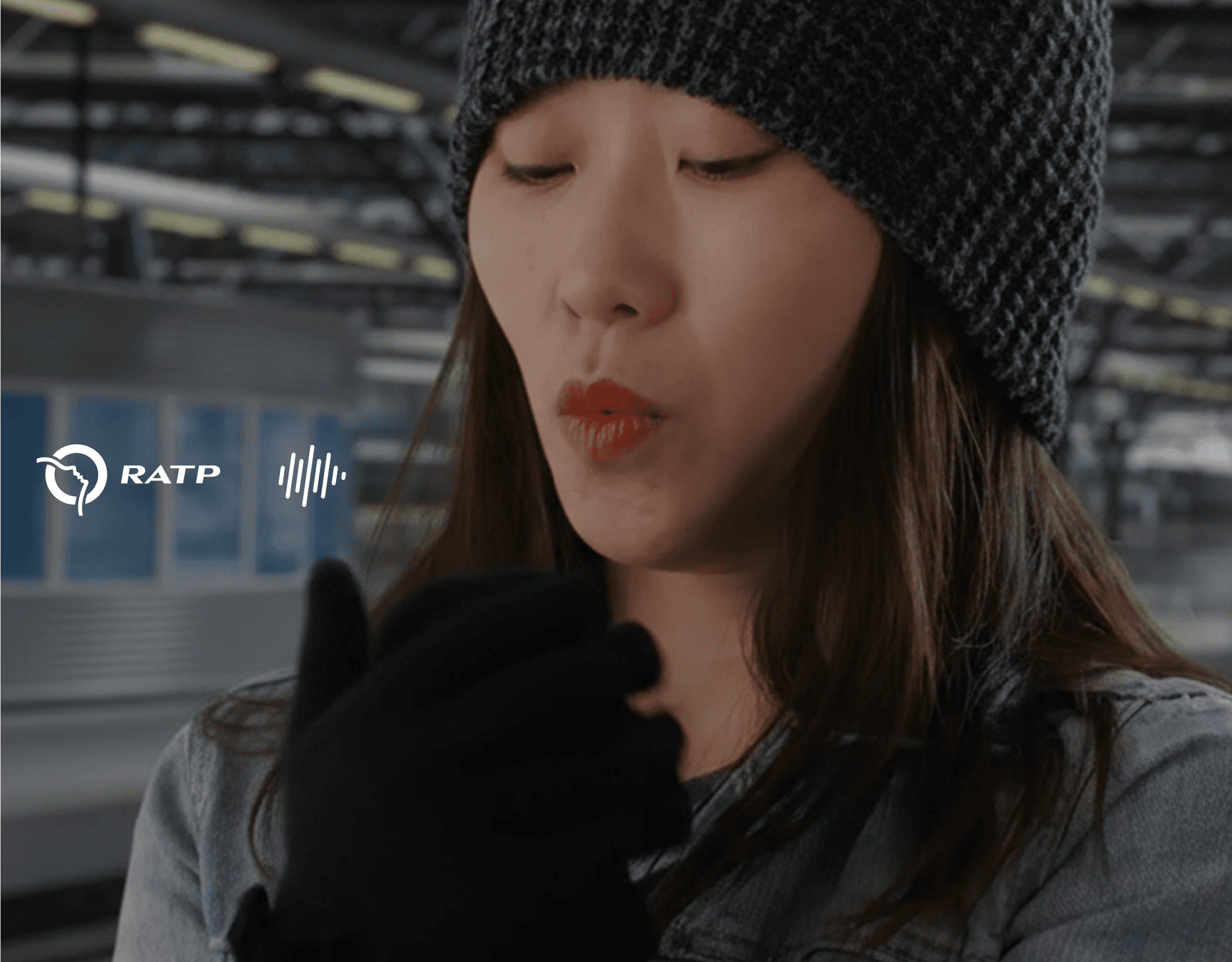
Beyond the technological breakthrough, the RATP voice assistant prototype redefined the very idea of public information. No longer a static screen or printed timetable, it became a living interface, one that listens, understands, and responds in real time. Compact, affordable, and privacy-respecting, this scalable prototype proved that innovation in mobility doesn’t need to be complex to be transformative.